


How to protect yourself from the sun in Mexico? Rules for using sunscreen
Sunscreen in Mexico: The Rules You Need to Know in 2026
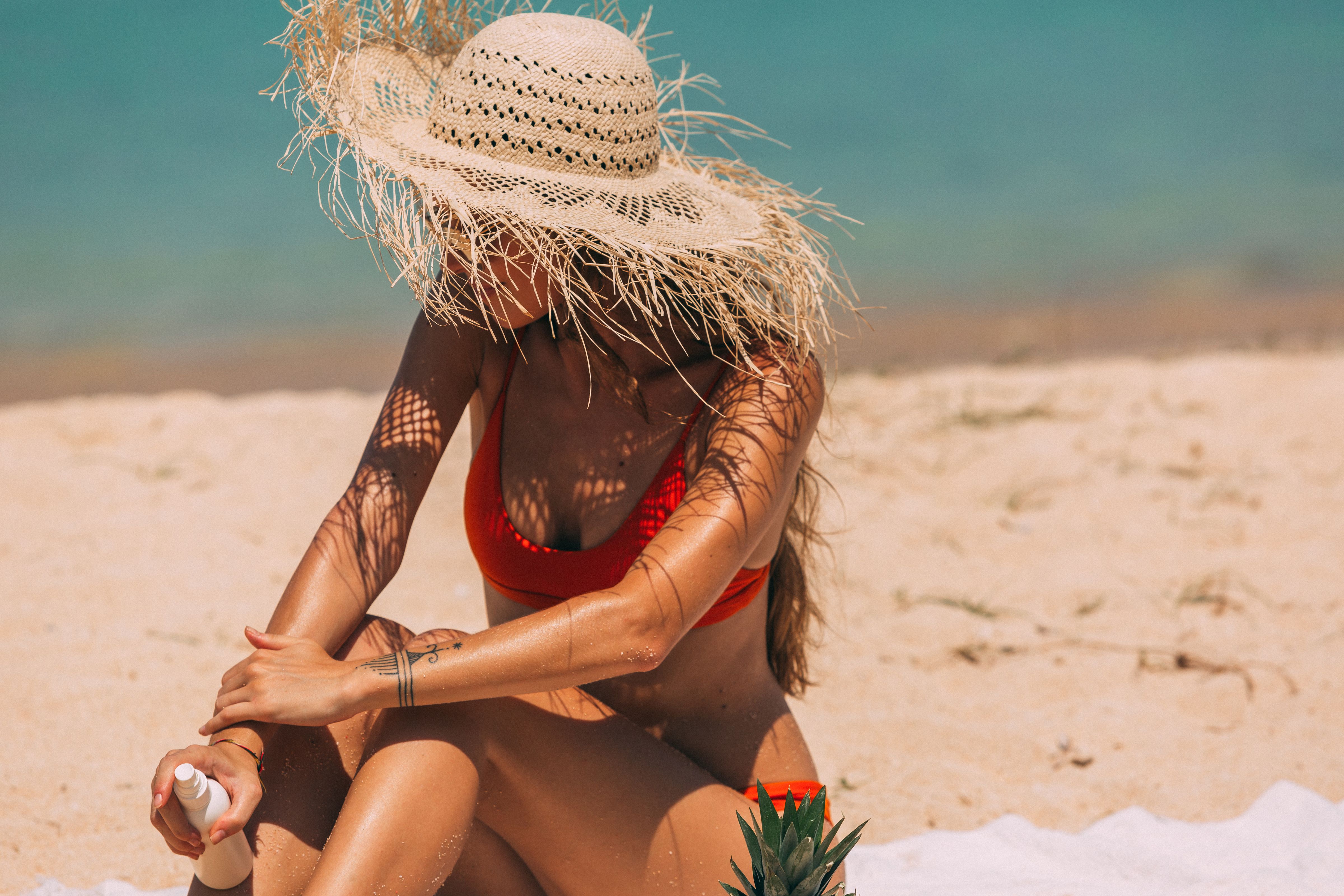
Short answer: yes, you can bring sunscreen to Mexico. No national ban, no confiscation at the airport. It is the cenotes, the eco-parks and the marine reserves that enforce their own rules, and there, only a mineral, biodegradable formula gets through.
The confusion around this is enormous. One traveler reads that sunscreen is banned outright, another gets turned away at a cenote gate holding a bottle bought back home.
We live here, in Playa del Carmen, and we guide travelers across the peninsula every week. Here is what we repeat before every departure. Let’s get into it.
Can you bring sunscreen to Mexico?
Yes, with no restriction at the border. Your sunscreen clears customs like any other cosmetic, and nobody is searching bags for it in Cancún or Mexico City.
The rule changes the moment you get in the water. Not everywhere, and not in the same way, which is exactly what confuses people.
On a public beach in Playa del Carmen or beside your hotel pool, your usual sunscreen raises no regulatory issue. In a cenote, a marine reserve or an eco-park, it will be refused at the gate or you will be asked to shower before swimming.
Where we stand: travel with one sunscreen only, mineral and biodegradable, usable everywhere. Two different bottles in the suitcase is a guarantee you grab the wrong one on cenote day.
Where conventional sunscreen gets refused
The places involved are not marginal exceptions. They are exactly the reasons people come to Mexico.
The principle is easy to remember. As soon as a body of water does not renew itself, or shelters coral, the rules tighten.
| Place | Rule enforced | What we advise |
|---|---|---|
| Cenotes in Yucatán and Quintana Roo | Conventional sunscreen refused, mandatory shower before swimming at many sites | No sunscreen in the water, wear a UV rash guard instead |
| Eco-parks such as Xcaret, Xel-Há, Xplor, Río Secreto | Bag check at the gate, non-compliant products stored in a locker | Certified mineral formula, or buy on site at park prices |
| Isla Contoy | National park: no sunscreen accepted at all, not even biodegradable | Nothing on your skin. UV clothing, a hat and shade on board |
| Isla Mujeres | Protected natural area with strict cosmetic rules | Biodegradable only, applied one hour before boarding |
| Cozumel and the El Cielo reef | National marine park protecting the Mesoamerican reef | Wetsuit or long-sleeve rash guard for snorkeling |
| Sian Ka’an | UNESCO-listed biosphere reserve | Hat, covering clothes, mineral sunscreen out of the water |
| Puerto Morelos | National reef park, operators actively brief visitors | Biodegradable, applied one hour before the boat leaves |
| Bacalar lagoon | Protected stromatolites, creams and oils strongly discouraged | Nothing on the skin in the water, no sunscreen and no repellent |
The details vary from one site to the next and shift from season to season. We check current conditions before each of our departures and confirm what you need beforehand.
If you are mapping out your route, our pick of the best cenotes in the Riviera Maya and our list of the 16 must-sees of the Riviera Maya will help you spot the sites concerned.

How to spot genuinely reef safe sunscreen
Neither “reef safe” nor “biodegradable” is governed by a single binding standard. Any brand can print either phrase on a bottle without certification behind it.
The result: plenty of travelers show up at an eco-park gate with a bottle labeled ocean-friendly and watch it get refused. Frustrating, and entirely avoidable.
The ingredients that get a bottle refused
Turn the bottle over and read the ingredient list. If one of these names appears, the product will be set aside at most protected sites.
- Oxybenzone (benzophenone-3), the most closely watched of them all.
- Octinoxate, also listed as ethylhexyl methoxycinnamate.
- Octocrylene, extremely common in mass-market formulas.
- Homosalate and octisalate.
- 4-methylbenzylidene camphor, often shortened to 4-MBC or enzacamene.
- Parabens and microplastics such as polyethylene.
Mineral filters versus chemical filters
Chemical filters absorb radiation, mineral filters reflect it. The second group is what travels everywhere.
In practice you want a product whose active ingredients stop at zinc oxide and titanium dioxide, ideally in non-nano form.
The trade-off: a thicker texture and a faint white cast on application. Honestly, thirty seconds of rubbing sorts that out, and it settles the question at every gate on the peninsula.
The greenwashing trap
An organic sunscreen is not automatically biodegradable. Organic certification governs where ingredients come from, not how they behave in water.
The reverse is also true: a mineral sunscreen with no organic label often sails through. The criterion that counts is the filter list, not the logo on the box.
What we check before buying a bottle
We do not push a specific brand, since ranges change too fast from one country to the next. The checklist, on the other hand, never moves.
- SPF 50 or higher, nothing below. At this latitude an SPF 30 gets overtaken within two hours on the sand.
- Broad spectrum, UVA and UVB. The circled UVA logo is a reliable marker.
- Mineral filters only: zinc oxide, titanium dioxide, with no chemical filter alongside.
- Water resistance stated on the label, even partial. Between the sea, the pool and sweat, you use it daily.
- Format: choose a cream or stick over a spray, which is harder to dose and often banned on boats.
- Volume: plan on roughly 7 fluid ounces per person per week if you are out in the sun daily.
That bottle is one of the essentials we list in our guide on what to pack for Mexico.
Where to buy sunscreen and what it costs
Buying before you fly is by far the cheaper route. Certified mineral formulas are easy to find across the United States and Canada.
You will find options on the ground too, but the price tag often surprises people.
| Where | What you find | Our take |
|---|---|---|
| Before you fly, at home | Wide choice of certified mineral formulas | Best value and best reliability. Our default recommendation. |
| Mexican supermarkets (Chedraui, Walmart, Soriana) | Local and international brands, some biodegradable options | Solid backup. Read the ingredients, not everything qualifies. |
| Pharmacies | Dermatological ranges, high SPF | Quality is there, prices run higher than the supermarket. |
| Eco-park and cenote gift shops | Products pre-approved by the site, compliant for sure | The rescue option. Expect two to three times the usual price. |
| Hotel shops and tourist strips | Limited choice, large containers | Avoid unless it is an emergency. The highest prices anywhere. |
Worth knowing: containers over 3.4 ounces are refused in carry-on luggage. For two weeks and two people, the bottle goes in your checked bag. Keep a small stick in your day bag for your face, which is allowed and handy the moment you land.
UV clothing, the fix that solves everything
This is the advice we give most often and the one you read least elsewhere. A long-sleeve rash guard rated UPF 50+ solves the problem in one move.
It is never refused at a protected site. It does not wash off. It does not need reapplying every two hours. And once bought, it costs nothing to use.
On the ground, the full kit comes down to four pieces.
- A long-sleeve UV top, essential for snorkeling and cenotes.
- A wide-brim hat rather than a cap, which leaves neck and ears exposed.
- Category 3 sunglasses with a UV400 filter.
- A light shirt or cover-up for the harshest hours, between 11 a.m. and 4 p.m.
With that kit, sunscreen only covers your face, hands and the tops of your feet. One bottle then easily lasts two weeks.
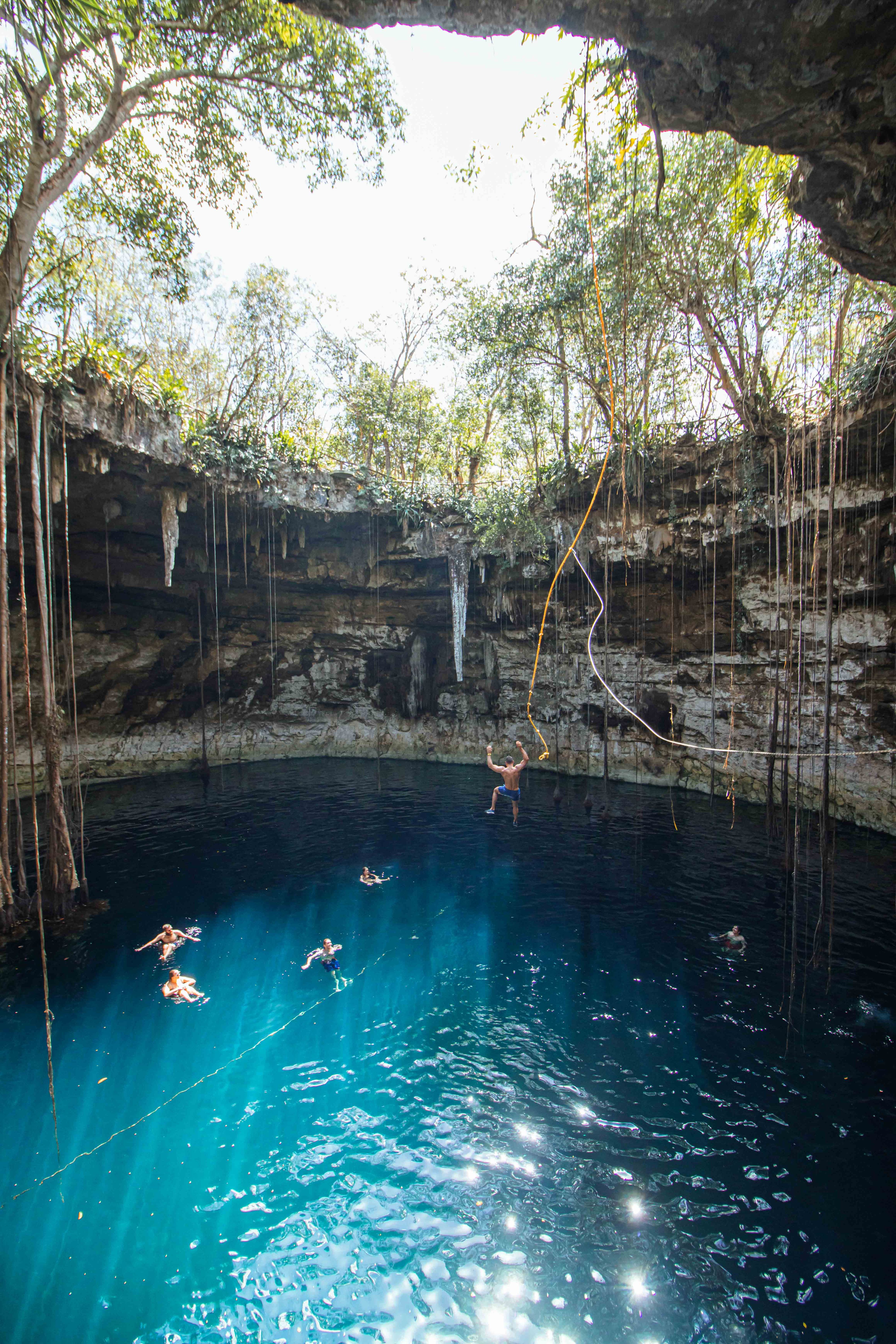
The UV index in Mexico, region by region
The Yucatán peninsula sits below the Tropic of Cancer. The UV index there regularly climbs past 11 between 11 a.m. and 4 p.m., the level the World Health Organization labels extreme.
At that level, unprotected fair skin starts to burn in about fifteen minutes. That is faster than most travelers expect.
On the Caribbean coast
Cancún, Playa del Carmen, Tulum, Bacalar, Holbox. Humid heat, strong glare off white sand and turquoise water. The sea breeze masks the burning sensation, and that is the trap.
On the Pacific coast
Puerto Escondido, Puerto Vallarta, Los Cabos. Drier air, radiation just as intense. Sweat evaporates fast, which creates a false impression of coolness.
At altitude
Mexico City, Oaxaca, San Cristóbal de las Casas, Guanajuato. The air is cool, sometimes genuinely cold at night, while radiation rises with elevation. This is where we see the most unexpected sunburns.
Season matters too. To time your trip well, we break it all down in our guide to the best season to travel to Mexico.
How to apply it: timing, dosing, rinsing
The best product in the world applied badly protects badly. Here is the routine we hand our travelers before every outing.
- Always apply one hour before you get in the water, on dry skin, at the hotel rather than on the beach. Your skin needs that time to absorb the product properly.
- Use a generous amount. The SPF on the label assumes far more product than most people apply.
- Reapply every two hours, and always after swimming or heavy sweating.
- Do not skip the forgotten spots: ears, neck, tops of the feet, backs of the knees, lips and scalp.
- Shower before entering a cenote. Many sites require it, all of them appreciate it.
- Avoid exposure between 11 a.m. and 4 p.m. That is when the index peaks.
On the ground: one bottle of water per person per half-day, minimum. Sunburn and dehydration usually arrive together, and tap water is not drinkable in Mexico. If things do go wrong, we explain how it works in our guide to medical support in Mexico.
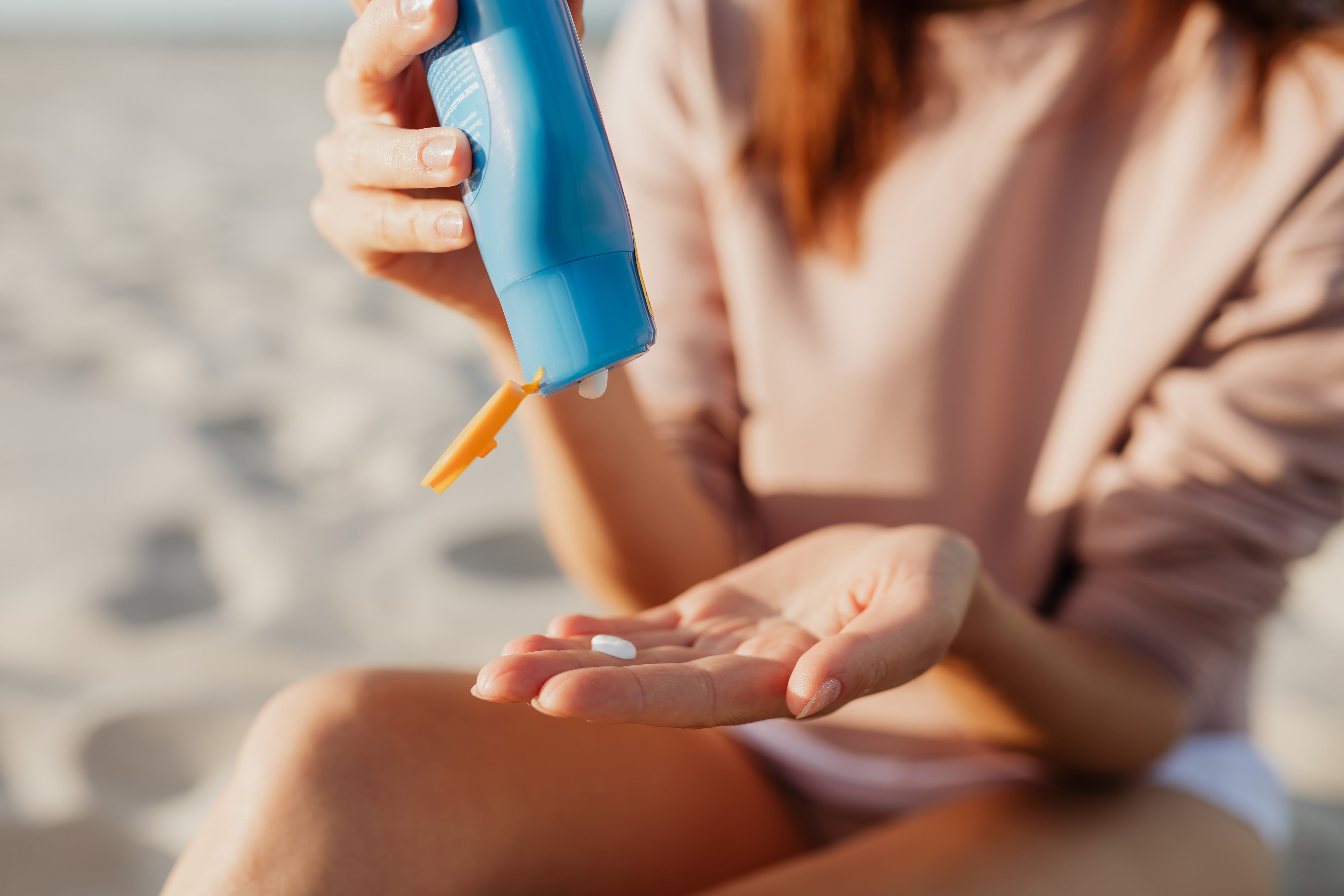
Sunscreen and insect repellent: the right order
Both products ride along in every suitcase headed for Mexico. Combined the wrong way, they cancel each other out.
The rule fits in one sentence. Sunscreen first, repellent second, with about twenty minutes between them.
The other way around, the repellent breaks down the protective film and sun protection drops sharply. It is the most common mistake late in the day, right around sunset drinks by the lagoon.
Same environmental logic for repellent: in cenotes and at Bacalar, pick a biodegradable formula, or skip it until after your swim.
Babies, kids and sensitive skin
At this latitude the margin for error is thin for the youngest travelers. We keep the rule simple.
- Under six months: no sunscreen. Shade, covering clothes and a hat, no exceptions.
- Six months to three years: dedicated mineral formula for children, SPF 50+, fragrance-free and alcohol-free.
- Over three: same product, plus the UV rash guard and wide-brim hat combination.
- Sensitive skin or photosensitizing medication: mineral filters only, and medical advice before you travel.
We cover the whole family logistics side in our guide on what to plan for when traveling to Mexico with a baby.
What we plan for on our tours
Sun protection is part of the standard briefing before every outing we run. Our certified English-speaking guides restate the rules of the specific site and make sure nobody gets stuck at the gate.
Depending on your setup, that plays out differently.
- Group or private tours, departing from your hotel or meeting you on site if you are road-tripping. The gear briefing goes out ahead of time.
- Airport and inter-site transfers: a supermarket stop along the way is possible if you need to restock.
- Car rental so you can explore the cenotes at your own pace. Here are our tips for renting a car in the Riviera Maya.
- Private boat charter for Isla Mujeres, Holbox or Puerto Morelos. Shade on board and a reminder of the marine park rules.
- Fishing trips: long exposure out at sea, so we push hard on the rash guard. Our best fishing spots in the Riviera Maya are detailed here.
- Private chef and concierge service for the days you would rather stay in the shade of your villa.
And if you want to understand how we work upstream of your trip, find out what a travel coach actually does.
Plan your trip to Mexico with us
Group or private tours, transfers, car and boat rental, private chef: we handle the logistics and pressure-test your itinerary with you, with no commitment.
The mistakes we see every single day
- Showing up at a cenote with conventional sunscreen. The most common one, and the one that derails the morning.
- Trusting the word organic on the packaging. Organic certification says nothing about how a product behaves in water.
- Applying on the beach instead of at the hotel. The product has no time to set before the first swim.
- Putting repellent on before sunscreen. The reverse order tanks your protection.
- Under-dosing. SPF 50 in a thin layer performs like a much lower number.
- Forgetting altitude. In Mexico City or San Cristóbal the cool air lowers your guard while radiation climbs.
- Buying at the park gate. Convenience costs two to three times the normal price.
For the rest of your prep, everything sits in our guides on the formalities for traveling to Mexico and on getting around Mexico.
Frequently asked questions about sunscreen in Mexico
Can you bring sunscreen to Mexico?
Yes. No national rule stops you from entering Mexico with sunscreen, and nobody will confiscate it at Cancún airport. The restrictions come from the sites themselves: cenotes, eco-parks, marine reserves and lagoons enforce their own rules and turn away conventional formulas.
Is sunscreen banned in cenotes?
In the vast majority of cenotes open to the public, yes, conventional sunscreen is refused. The fresh water sits in a closed system and does not clean itself. Many sites also require a shower before you swim, even when your product is biodegradable.
What sunscreen should I take to Mexico?
A mineral formula built on zinc oxide or titanium dioxide, free of oxybenzone, octinoxate and octocrylene, at SPF 50 or higher. That is the one category accepted almost everywhere, cenotes and eco-parks included.
Which ingredients get sunscreen refused at Mexican eco-parks?
The names posted most often at the gate: oxybenzone, octinoxate, octocrylene, homosalate, 4-methylbenzylidene camphor, parabens and microplastics. Turn the bottle over and read the ingredient list before you buy.
Does reef safe mean the same thing as biodegradable?
Not exactly, and that gap catches a lot of travelers. Neither term is tied to a single legal standard. What actually gets you through the gate is a filter list limited to mineral actives, so read the ingredients rather than the marketing claim on the front.
Where can I buy reef safe sunscreen in Mexico?
At pharmacies, in large supermarkets such as Chedraui or Walmart, and in the shops inside the eco-parks. Watch the price: on site it climbs sharply, especially at the entrance to tourist attractions. Buying before you fly stays the cheapest option.
Can sunscreen go in my carry-on?
Yes, in containers of 3.4 ounces or less, gathered in one clear quart-sized bag. Anything larger goes in checked luggage. For two weeks and two people, checked luggage is the realistic answer anyway.
How strong is the UV index in Mexico?
On the Yucatán peninsula the index regularly climbs above 11 between 11 a.m. and 4 p.m., the level the World Health Organization calls extreme. At altitude, in Mexico City or San Cristóbal, the cool air is misleading while the radiation stays very high.
Is UV clothing a good alternative to sunscreen?
It is our number one recommendation for cenotes and snorkeling. A long-sleeve rash guard rated UPF 50+ protects continuously, does not wash off in the water, and is never refused at the entrance to a protected site.
Do babies and children need a different sunscreen?
Yes, a dedicated mineral formula for children at SPF 50+. Under six months, shade and covering clothes remain the recommendation rather than sunscreen. Add a wide-brim hat and UV-filtering sunglasses.
Sunscreen and insect repellent: which goes on first?
Sunscreen first, repellent second, with about twenty minutes in between. The reverse order sharply reduces sun protection. Pick a biodegradable repellent if your day includes a cenote.
How much sunscreen should I pack for two weeks?
Plan on roughly 7 fluid ounces per person per week for daily exposure, reapplying every two hours. Two 7-ounce tubes per adult for a fifteen-day trip is a realistic ballpark.