


Riviera Maya: 16 Must-See Places (2026 Local Guide)
Riviera Maya: 16 Must-See Places (2026 Local Guide)
Short version: the Riviera Maya runs 80 miles down the Caribbean coast between Puerto Morelos and Punta Allen, and it packs in more than you can possibly see in a week. Here are the 16 places we actually recommend, with durations, ballpark prices and the right time of day for each. The rest is triage.
Seven thousand cenotes recorded across the peninsula. Four islands you can reach in a day. Five major Maya sites within a three-hour drive. And the second-largest barrier reef on the planet running the length of the coast.
Honestly, the hard part in the Riviera Maya is not finding things to do. It is choosing.
We live here, in Playa del Carmen, and we take travelers to these sites every week. Here is our shortlist, grouped by type, with the same advice we give on the phone. Let’s go.
Riviera Maya basics
The Riviera Maya is the coastal strip of the state of Quintana Roo, in southeastern Mexico. It starts at Puerto Morelos, just below Cancún, and runs down to Punta Allen.
It is not a city and not a park. It is an 80-mile highway corridor along which everything is organized.
Two towns work as a base: Playa del Carmen in the middle, Tulum in the south. Cancún is the arrival airport, but few travelers sleep there more than one night.
| Where it is | State of Quintana Roo, Yucatán Peninsula, Caribbean coast of Mexico |
|---|---|
| Airport | Cancún (CUN), 1 hour from Playa del Carmen, 1 hour 45 from Tulum |
| Recommended stay | 7 to 10 days for the coast alone, 15 days with the Yucatán |
| Best season | December through March, dry season and clear water |
| Currency | Mexican peso (MXN). Dollars are accepted, but at a poor rate |
| Time zone | Eastern Standard Time year-round, no daylight saving |
| Language | Spanish, with widespread English in tourist areas |
Two useful reads before you fly: our notes on entry formalities for Mexico and our packing list for Mexico.
All 16 must-sees at a glance
The table below sums up the shortlist. Prices are indicative, in Mexican pesos or US dollars, and change every year. We re-check them before every departure.
| Place | Type | Duration | Ballpark price |
|---|---|---|---|
| 1. Tulum | Maya site | Half day | ≈ 250-350 MXN |
| 2. Cobá | Jungle Maya site | Half day | ≈ 100-150 MXN |
| 3. Muyil | Maya site + canals | Half day | ≈ 60 MXN + boat |
| 4. Chichén Itzá | Major Maya site | Full day | ≈ 700 MXN |
| 5. The cenotes | Natural swimming | 2 to 5 hrs | 150-600 MXN each |
| 6. Cozumel | Island and diving | Full day | Ferry ≈ 500 MXN r/t |
| 7. Isla Mujeres | Island and beach | Full day | Ferry ≈ 400 MXN r/t |
| 8. Holbox | Car-free island | 2 days minimum | Ferry ≈ 500 MXN r/t |
| 9. Isla Contoy | Bird sanctuary | Full day | Guided tour only |
| 10. Bacalar | Seven-color lagoon | 2 days minimum | Boat from 500 MXN |
| 11. Xcaret | Eco-cultural park | Full day | ≈ 120-160 USD |
| 12. Xel-Há | Water park | Full day | ≈ 100-140 USD |
| 13. Akumal | Sea turtles | 2 to 3 hrs | ≈ 600-900 MXN |
| 14. Puerto Morelos | Coral reef | Half day | ≈ 600-900 MXN |
| 15. Sian Ka’an | UNESCO reserve | Full day | Guided tour only |
| 16. Playa del Carmen | Town and Quinta Avenida | Evening | Free |
Our rule of thumb: on a seven-day trip, four major outings is plenty. Beyond that you spend your vacation on the road and fly home more tired than you left. We break down realistic pacing in our guide to one week in the Riviera Maya.
The Maya sites: Tulum, Cobá, Muyil and Chichén Itzá
Four sites, four completely different experiences. The classic mistake is stacking them back to back, when they work far better spaced two or three days apart.
1. Tulum, the Maya city facing the sea
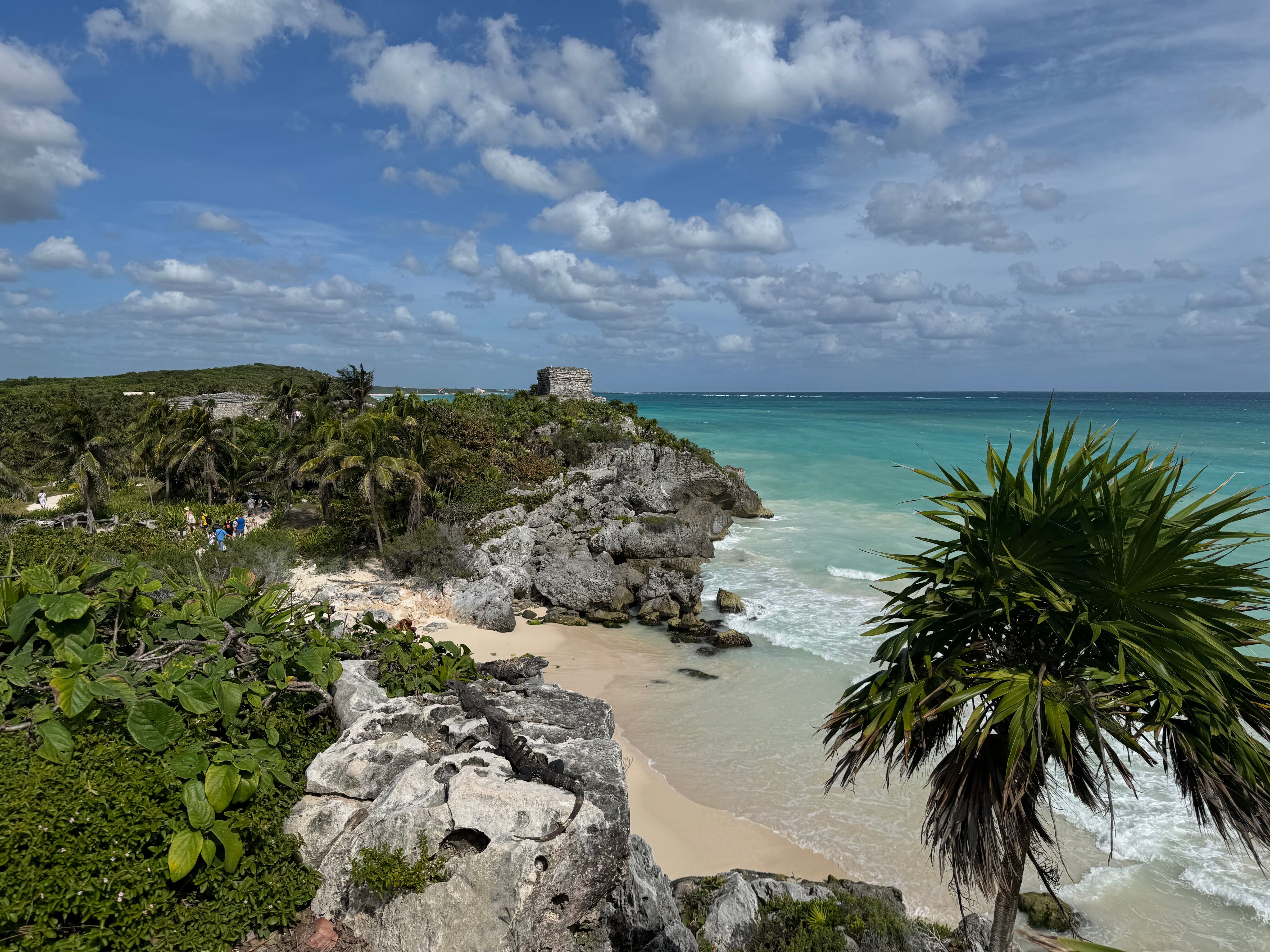
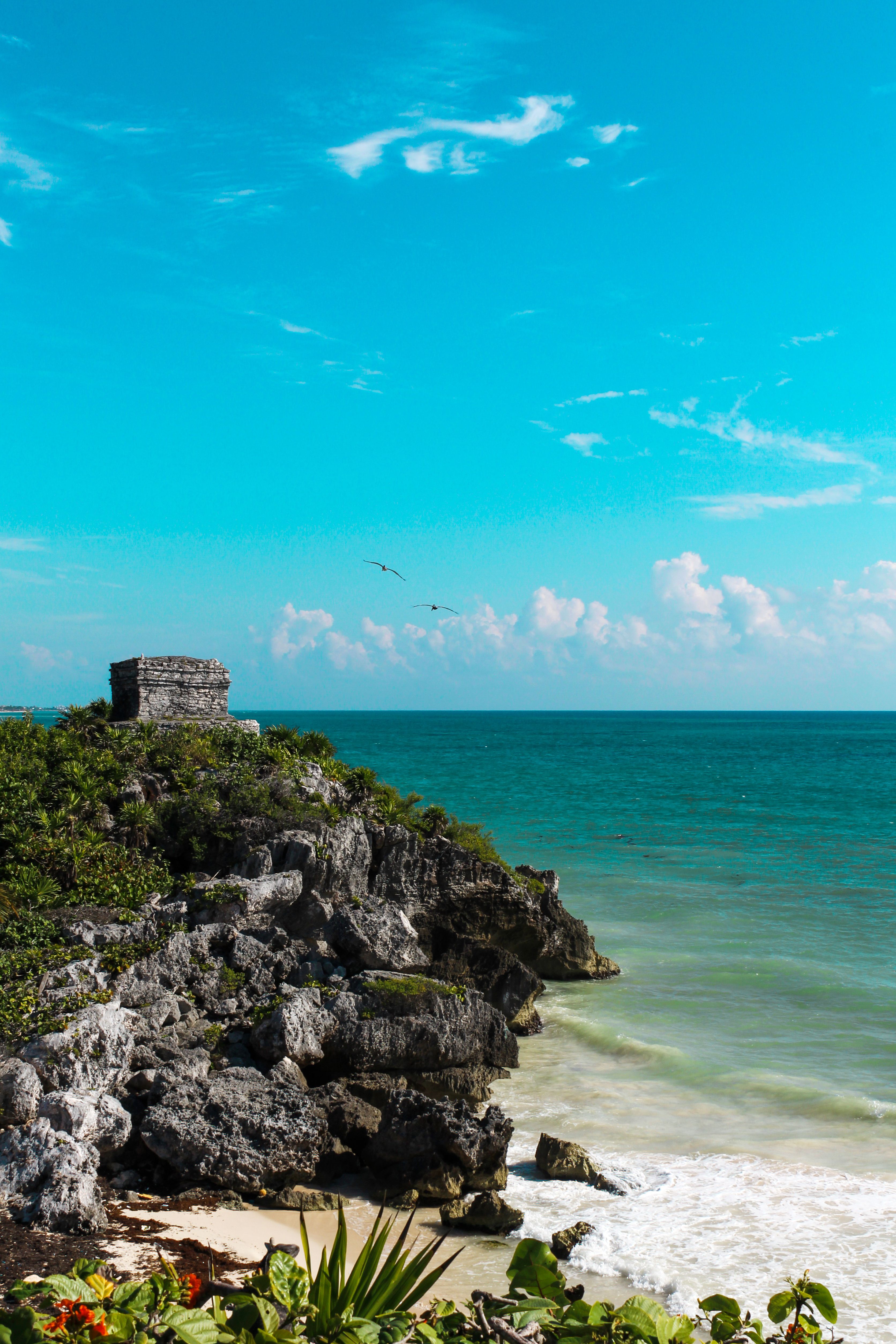
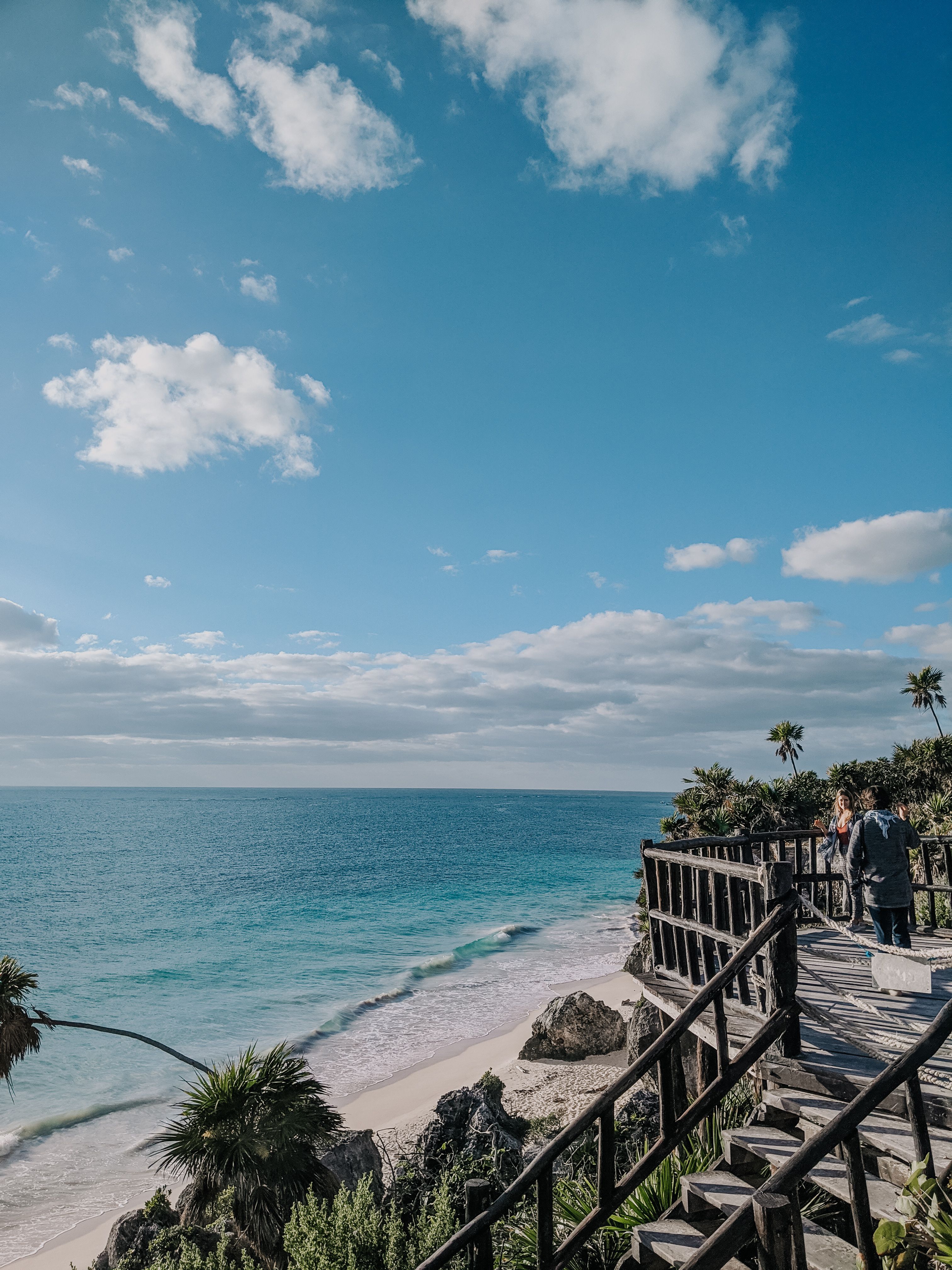
The only Maya site built on the ocean. A former trading port perched on a 40-foot cliff, with the Caribbean as a backdrop.
The site is small and takes about an hour and a half. Its strength is the setting, not the scale.
Since Jaguar National Park opened, access runs through a new entrance and the fee combines several tickets. Budget 250 to 350 pesos per person depending on what is included.
On the ground: arrive at opening, around 8 a.m. The site is fully exposed with no shade at all, and tour buses roll in around 10. The beach below is sometimes closed depending on sea conditions.
2. Cobá, the city swallowed by the jungle
Forty-five minutes from Tulum, Cobá spreads across more than 27 square miles between five lagoons. Much of the site is still covered by forest.
You get around on foot, by bike or by pedicab. The feel is nothing like Tulum: here you walk in the shade, with birds overhead.
Climbing the Nohoch Mul pyramid has been banned since 2020. The site more than holds up without it.
3. Muyil, the quietest site around
Twenty minutes south of Tulum, on the edge of the Sian Ka’an reserve. A small Maya site wrapped in dense forest, and almost always empty.
The interest goes beyond the ruins. A boardwalk leads to the lagoon, the launch point for the float down the Maya canals.
Frankly, it is one of the best half days in the Riviera Maya, and one of the least crowded.
4. Chichén Itzá, the wonder of the world
Two and a half hours from Playa del Carmen, in the neighboring state of Yucatán. A UNESCO World Heritage site and one of the seven new wonders of the world.
This is a full day, not a half day. Count five hours of driving round trip and two to three hours on site.
Watch the time zone: Yucatán runs one hour behind Quintana Roo. We cover everything in our guide to visiting Chichén Itzá.
The cenotes, the region’s signature
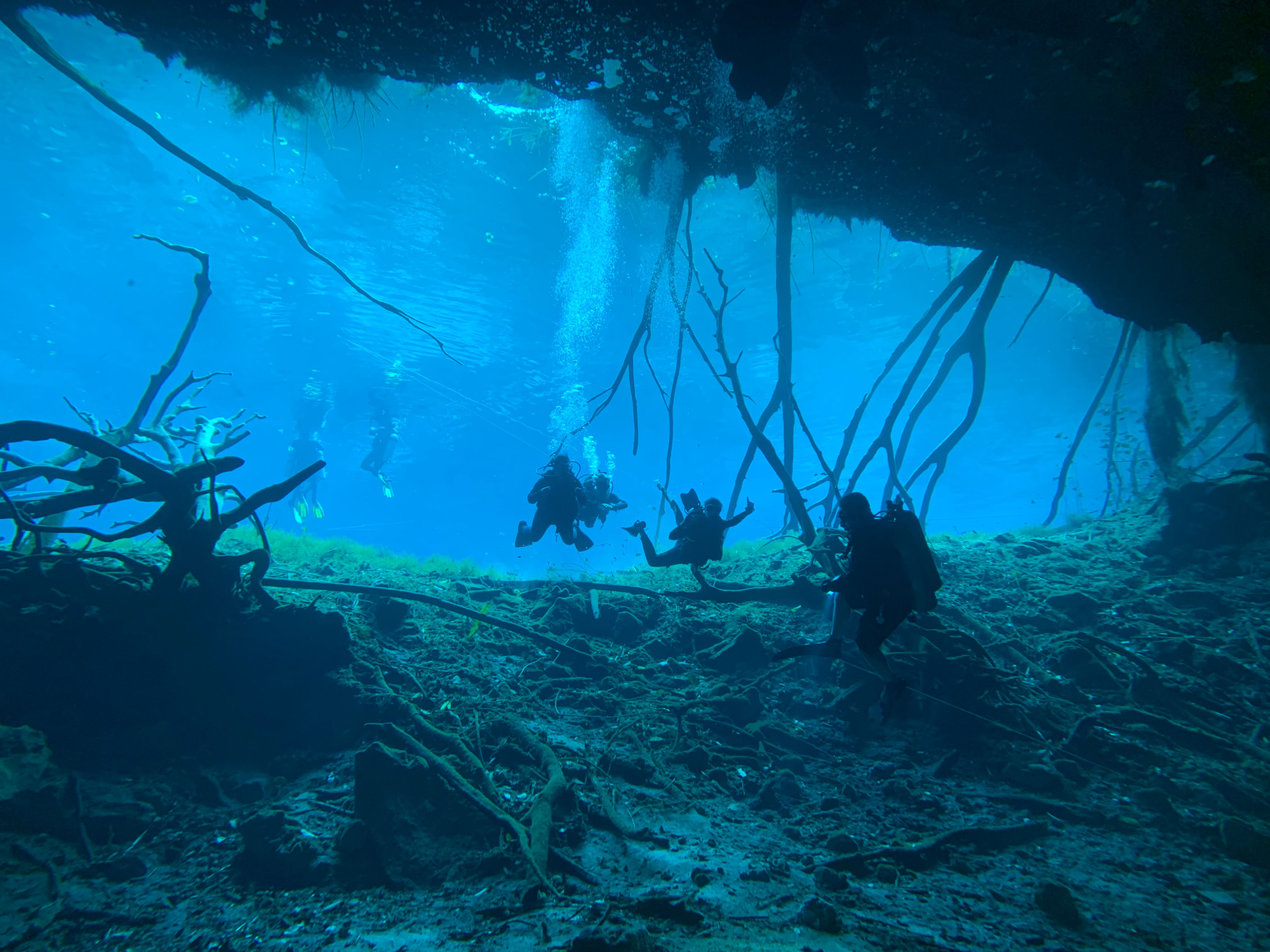
A cenote is a limestone sinkhole opening onto the groundwater table. The peninsula has more than seven thousand of them, several hundred open to the public.
For the Maya they were gateways to the underworld. For you, they will be the most surprising swim of the trip.

5. The three families of cenotes
- Open. Fully open to the sky and ringed by jungle. Bright, easy, perfect for a first swim.
- Semi-open. A partly collapsed vault lets shafts of light through. The most photogenic of the three.
- Closed or cave. Fully underground, with stalactites and water around 75°F. Striking, occasionally intimidating.
The road between Tulum and Playa del Carmen concentrates a great lineup, all within thirty minutes of Highway 307. We compare the best ones in our guide to which cenotes to visit in the Riviera Maya.
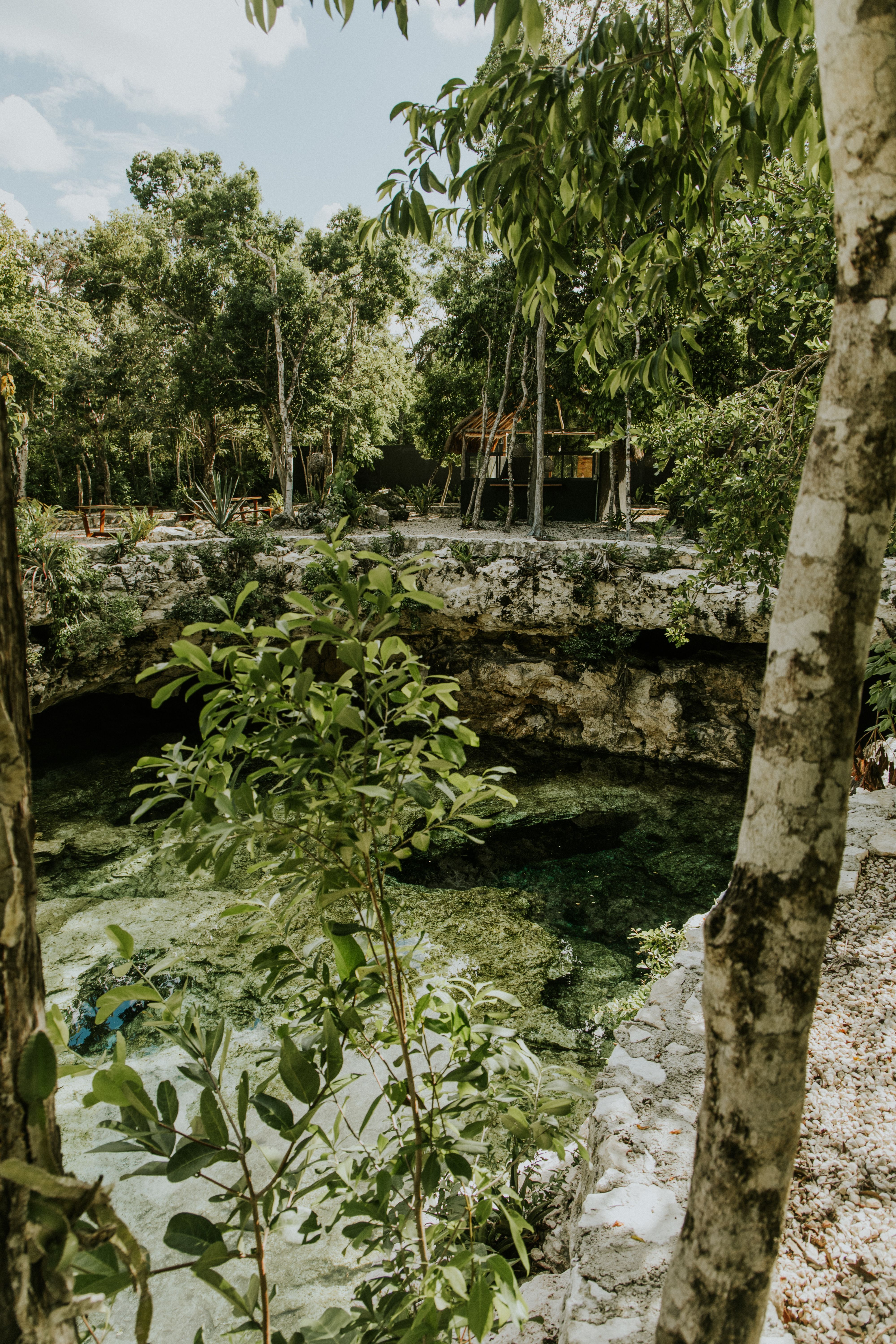
Good to know: conventional sunscreen is banned in nearly every cenote, even the water-resistant kind. A shower before swimming is mandatory. Switch to biodegradable mineral sunscreen and read our sun protection rules for Mexico.
The islands: Cozumel, Isla Mujeres, Holbox and Isla Contoy
Four islands, four moods. None resembles the other three, which is what makes the choice interesting.
6. Cozumel, a diver’s island
Forty-five minutes by ferry from Playa del Carmen. The island sits on the Mesoamerican Reef, the second-largest barrier reef in the world.
Underwater visibility regularly tops 100 feet. It is the best diving in Mexico, and word has gotten out.
Even without certification, boat snorkeling gives you access to spectacular drop-offs. We handle the crossing, the boat charter and the guiding.
7. Isla Mujeres, the perfect beach day
Twenty-five minutes by ferry from Cancún. Five miles long, easy to circle by golf cart, with Playa Norte at the end.
That beach shows up regularly in world rankings. Powder-white sand, turquoise water, and waist-deep shallows that run out for a hundred feet.
The north side of the island is also spared by sargassum most of the time. That matters a lot between April and August.
8. Holbox, the car-free island
North of the peninsula, separated from the mainland by a lagoon. You get there by ferry from Chiquilá, about two and a half hours from Cancún.
No cars, sand streets, hammocks staked out in the water. The rhythm changes completely.
From June to September it is also the launch point for swimming with whale sharks. One night minimum, ideally two. We compare Holbox and Bacalar in this dedicated guide.
9. Isla Contoy, the protected reserve
A national park since 1998, the island caps daily visitors. Access is only possible with an authorized operator.
More than 150 bird species nest here, including frigatebirds and brown pelicans. It is also a sea turtle nesting ground.
The trip usually pairs with snorkeling on the Ixlaché reef. A day for nature lovers, not for beach-bar people.
Bacalar, the seven-color lagoon
10. The Bacalar lagoon
Three hours south of Tulum, almost at the Belize border. A freshwater lagoon 25 miles long, whose limestone bed produces every shade of blue you can think of.
No sargassum here, ever. That is the unbeatable argument between April and August.
The boat or catamaran tour takes in the Pirates’ Channel, Cenote Negro and the stromatolites, bacterial formations among the oldest life forms on Earth.
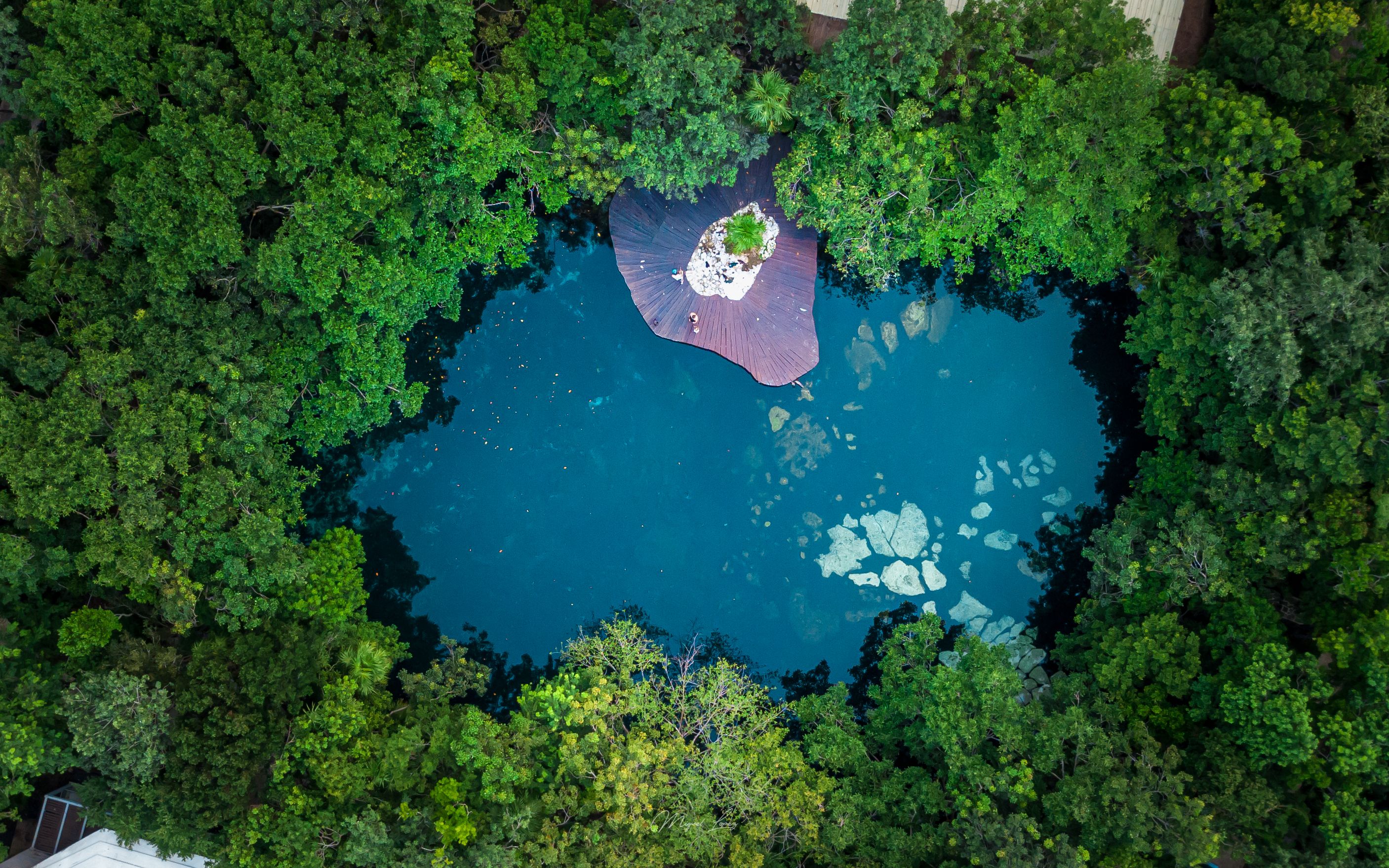
Our take: Bacalar does not work as a day trip from Playa del Carmen. Six hours of driving for three hours on site makes no sense. Plan two nights, or skip it.
The parks: Xcaret and Xel-Há
Two regional institutions, often pitted against each other when they simply target different travelers. Either way, the budget is significant.
11. Xcaret, the densest day out
An eco-archaeological park built around underground rivers, lagoons and a beach. Around forty activities are included in the entry ticket.
The highlight is the evening show, three hundred performers walking through the regional music and dance of Mexico. It is long, vivid and genuinely well done.
Plan to arrive at opening and leave after the show. Twelve hours on site, no less.
12. Xel-Há, the all-inclusive water day
A natural inlet where a freshwater river meets the sea. Snorkeling, zip lines, tubing, bikes and restaurants are all included in the ticket.
The pace is noticeably calmer than Xcaret. It is our default recommendation with young children, or for a day with zero logistics.
| Criterion | Xcaret | Xel-Há |
|---|---|---|
| Feel | Cultural and very dense | Aquatic and relaxed |
| Duration | 10 to 12 hours | 6 to 8 hours |
| Meals | Optional, depends on package | Included, drinks too |
| Best for | Families with teens, culture lovers | Young children, slower pace |
| Real highlight | The evening show | All-inclusive with no surprises |
Akumal and Puerto Morelos, the two snorkeling spots
13. Akumal and its sea turtles
Akumal means “place of the turtles” in Maya, and the name is well earned. Green turtles graze the seagrass beds of the bay year-round.
Free swimming over the beds is now regulated. Mandatory guide, mandatory life vest, capped time slots: restrictive, yes, but it is what saved the site.
Aim for the first slot of the morning, between 8 and 9:30 a.m. Clearer water and smaller groups.
14. Puerto Morelos and its national reef
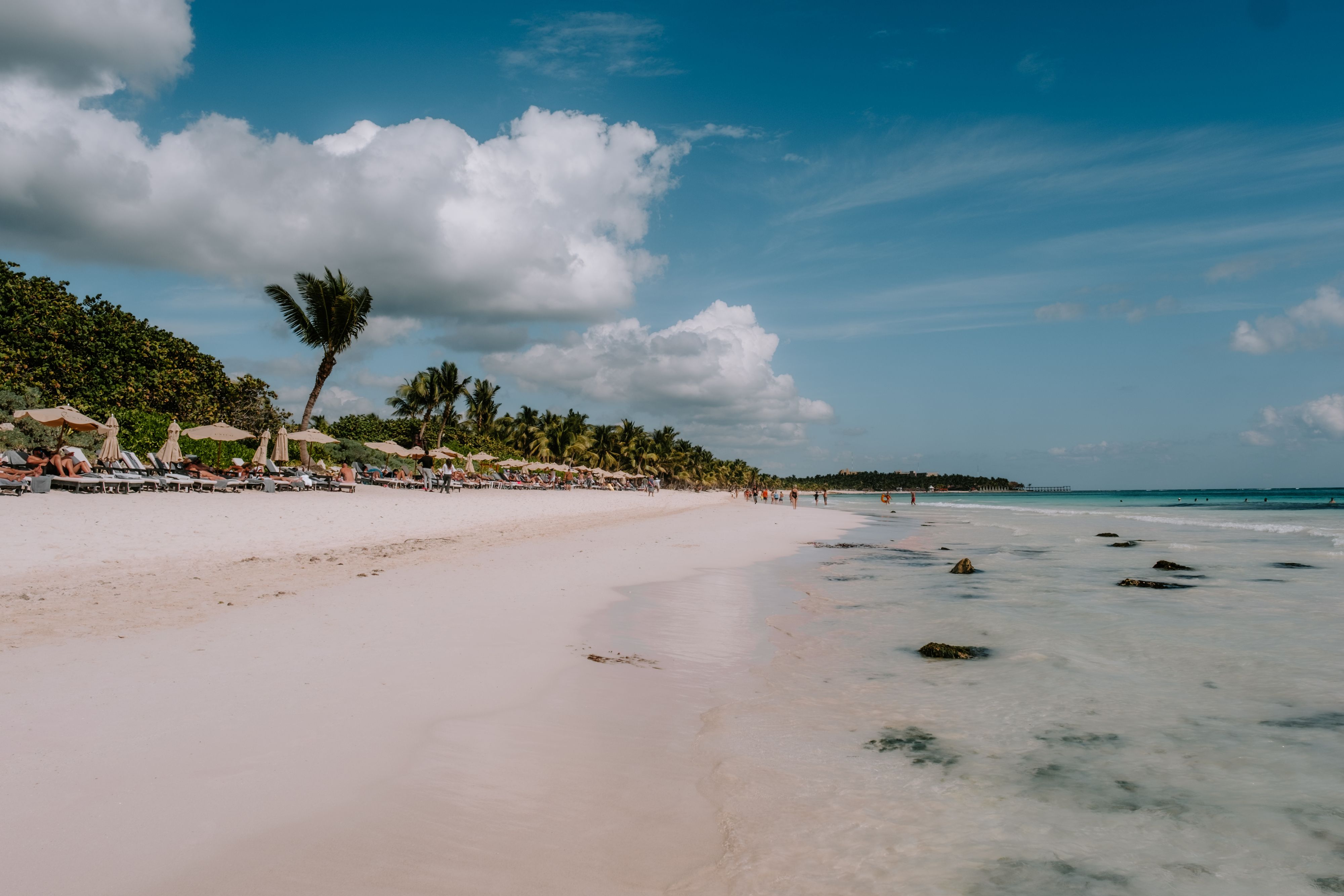
A fishing village wedged between Cancún and Playa del Carmen that has stayed surprisingly quiet. The reef sits about a third of a mile offshore.
It is a marine national park, which caps boat numbers and requires certified guides. The result: coral in far better shape than elsewhere on the coast.
Two hours on the water is enough. It is also a great launch point for sport fishing in the Riviera Maya.
Sian Ka’an Biosphere Reserve
15. Floating down the Maya canals
Nearly 2,000 square miles of mangrove, lagoon and tropical forest, UNESCO-listed since 1987. The name means “where the sky is born.”
Two main access points: through Muyil in the north, and through Tulum toward Punta Allen in the south.
The centerpiece is floating down canals the Maya dug more than a thousand years ago. You drift with the current for forty minutes, life vest on, mangrove on both sides.

Plan ahead: the road to Punta Allen is in rough shape and requires a high-clearance vehicle. If you want to go on your own, read our car rental advice for the Riviera Maya first.
Playa del Carmen and the Quinta Avenida
16. The Quinta Avenida and downtown
Playa is not a sight in the strict sense, but it is the base camp for most travelers. And the town is worth an evening of your time.
The Quinta Avenida, a pedestrian street running parallel to the sea, stretches close to two and a half miles. Craft shops, terraces, street musicians.
The first blocks are very touristy. Past 30th Street the atmosphere turns noticeably more local, and prices follow.
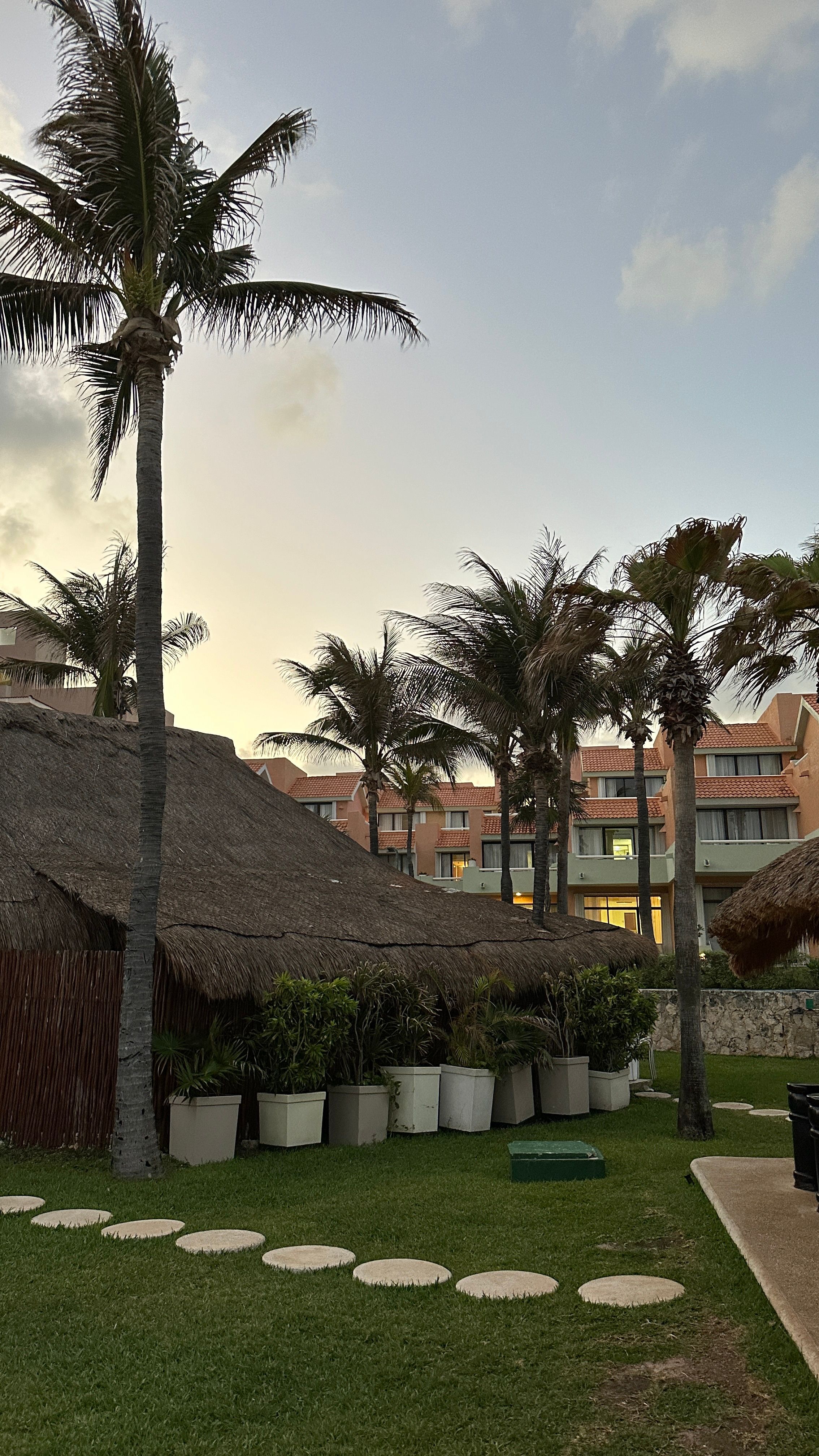
This is also where we organize our private-chef dinners, transfers and most of our tour departures. Our team lives in this town.
When to go and where the sargassum hits
This is the question that comes up in nearly every conversation we have. Here is the honest answer, month by month.
| Period | Weather | Sargassum | Crowds |
|---|---|---|---|
| December to February | Dry, 79 to 84°F, occasional windy nortes | Almost none | Very high |
| March and April | Dry and warm, calm sea | Low to moderate | High |
| May to July | Hot and humid, around 90°F | Peak season | Moderate |
| August and September | Humid, short downpours | Declining | Moderate |
| October and November | Transition, water clearing up | Low | Low |
Sargassum does not hit the region evenly. Isla Mujeres, Holbox, Bacalar and the cenotes stay accessible no matter what.
Our guide on swimming despite the sargassum in Mexico lists the beaches that get spared and the fallback options. For the national picture, see the best season to travel to Mexico.

How many days and which itinerary
Three formats work well depending on how much time you have. All of them start from Playa del Carmen.
Seven days, the most common format
- Day 1. Arrival, transfer, check-in, evening on the Quinta Avenida.
- Day 2. Tulum at opening, then a cenote on the way back.
- Day 3. Cozumel or Isla Mujeres for the day.
- Day 4. Beach and recovery. We mean it, this day earns its place.
- Day 5. Chichén Itzá plus a Yucatán cenote.
- Day 6. Akumal in the morning, Xel-Há or Muyil in the afternoon.
- Day 7. Last shopping and airport transfer.
Ten days, the sweet spot
The same backbone plus two nights in Bacalar or Holbox. This is the format we recommend most often, because it leaves room to breathe.
Fifteen days, Riviera Maya and Yucatán
A week on the coast, then a loop through Valladolid, Mérida, Izamal and the Gulf coast. A rental car genuinely pays off on this one.

Our detailed itinerary for one week in the Riviera Maya walks through each day hour by hour.
Getting around the Riviera Maya
Five options coexist, and the right one depends mostly on your program.
| Option | Best for | Watch out for |
|---|---|---|
| ADO bus | Cancún-Playa-Tulum corridor, tight budgets | Does not serve cenotes or remote beaches |
| Colectivo | Short hops between towns on Highway 307 | No large luggage, stops on request only |
| Tren Maya | Links to Valladolid, Chichén Itzá and Mérida | Stations often far from downtown, plan a transfer |
| Rental car | Cenotes, Bacalar, Yucatán road trip | Mandatory insurance often charged at the counter |
| Private transfer | Arrivals, departures, families, groups | Book ahead in high season |
We break down the rental traps in our car rental advice, and every option in getting around Mexico.
Two more useful reads before you take the wheel: should you worry about police checkpoints in Mexico and is it dangerous to travel to Mexico.
How much it costs
Here are ballpark figures per person per day, lodging included, excluding international flights.
| Item | Budget | Comfort | Premium |
|---|---|---|---|
| Lodging | $22 to $38 | $65 to $110 | $165 and up |
| Food | $13 to $20 | $27 to $44 | $55 and up |
| Activities | $11 to $22 | $33 to $65 | $88 and up |
| Transport | $6 to $11 | $17 to $33 | $44 and up |
| Daily total | $50 to $75 | $100 to $165 | $220 and up |
Three line items regularly get forgotten: highway tolls toward the Yucatán, the Quintana Roo tourist tax and tipping.
Tips are not optional here, they are part of how many people get paid. We explain the customary amounts in our guide to tipping in Mexico.
What we organize for you on the ground
We are based in Playa del Carmen, with local partners and certified English- and French-speaking guides. Here is what we take off your plate.
- Shared or private tours, with pickup at your hotel or directly on location if you are on a road trip.
- Airport and intercity transfers, with car seats on request.
- Car rental through agencies we know, insurance included and no surprise deposit at the counter.
- Boat charter for Cozumel, Isla Mujeres, Bacalar or a day of fishing.
- Private chef at your villa or condo, Mexican or international menus.
- Concierge support throughout your stay, by message, in English or French.
- Custom events: weddings, bachelor and bachelorette parties, birthdays, corporate retreats or spiritual retreats.
Not sure where to start? Read what a travel coach actually does and browse our services in Mexico.
Build your Riviera Maya trip with us
Book your shared or private tours, your car, your boat or your transfers. Then let’s go further and talk through your whole trip to make sure it holds together, with no commitment.
Our on-the-ground tips
- Half a gallon of water per person per outing. Humidity costs you far more than you feel.
- Biodegradable mineral sunscreen. Required in cenotes and parks, and far kinder to the reef.
- Cash in pesos. Many cenotes, colectivos and small restaurants do not take cards.
- Closed shoes at archaeological sites. The ground is uneven and slick after rain.
- Drones are banned at every INAH site and in several parks. Details in our guide to flying a drone in Mexico.
- Proper health insurance. Private care is excellent but expensive. We cover it in our article on medical support in Mexico.
- Book English-speaking guides early. There are few of them and their slots go weeks ahead from November to March.
Traveling with a toddler? We put our notes together in what to plan when traveling to Mexico with a baby.
Mistakes we see every single day
- Trying to do everything in seven days. The most common one, and the one that ruins the most trips.
- Stacking Chichén Itzá and Tulum on the same day. The two sites sit at opposite ends.
- Running down to Bacalar as a day trip. Six hours of driving for three hours on site.
- Forgetting the time difference between Quintana Roo and Yucatán. One hour, all year long.
- Visiting sites between 11 a.m. and 2 p.m. Peak crowds and peak heat at the same moment.
- Paying in dollars. The rate merchants apply costs you 10 to 15 percent more.
- Canceling a trip over sargassum. Cenotes, islands and Bacalar are simply not affected.
Frequently asked questions about visiting the Riviera Maya
What are the must-see places in the Riviera Maya?
Tulum, Cobá, Muyil and Chichén Itzá for Maya archaeology. The cenotes along the Tulum-Playa road for swimming. Cozumel, Isla Mujeres, Holbox and Isla Contoy for islands. Bacalar for its lagoon, Xcaret and Xel-Há for the parks, Akumal and Puerto Morelos for snorkeling, Sian Ka’an for nature and Playa del Carmen for the atmosphere. Sixteen sites that cover everything this coast does well.
How many days do you need in the Riviera Maya?
Seven days cover the essentials without rushing: two Maya sites, two or three cenotes, one island and two beach days. Ten days comfortably add Bacalar or Holbox. Under five days, pick two or three sites and do them properly.
What is the best time of year to visit the Riviera Maya?
December through March, during the dry season. The weather is dry, the water is clear and sargassum is almost absent. November and April are excellent compromises with fewer crowds and softer rates.
Is there sargassum in the Riviera Maya year-round?
No. The seaweed concentrates between April and August, peaking in May, June and July. It varies a lot from one beach to the next and one week to the next. North-facing islands such as Isla Mujeres and Holbox, plus the Bacalar lagoon, are generally spared.
Do you need a rental car in the Riviera Maya?
Not necessarily. The Cancún-Tulum corridor works very well with ADO buses, colectivos, the Tren Maya or tours with hotel pickup. A car becomes worth it as soon as you want to chain cenotes together or head down to Bacalar and the Yucatán.
What daily budget should I plan per person?
Roughly 50 to 75 USD per day on a budget trip, 100 to 165 USD in comfort and 220 USD and up in premium, lodging included. Site entries and theme parks are the heaviest line item, well above what most travelers expect.
Can you still climb the pyramids at Tulum and Cobá?
No. Climbing Nohoch Mul at Cobá has been banned since 2020, and Tulum is visited from the walkways only. Both sites remain impressive from ground level.
Which cenotes should I pick if I only have time for one or two?
For a first cenote, go for an open or semi-open one along the Tulum-Playa del Carmen road: the light is beautiful and the swim is reassuring. Then add a cave cenote for contrast. Our guides match the choice to your swimming level and the time of day.
Xcaret or Xel-Há: which one should I choose?
Xcaret for a full, dense, culture-heavy family day capped by a large evening show. Xel-Há for a calmer all-inclusive water day, ideal with young children or a slower pace.
Is the Riviera Maya good for family travel?
Yes, it is one of the easiest regions in Mexico with kids. Drives are short, beaches are shallow and parks like Xel-Há are built for families. Just plan shade breaks and a slower pace than the itinerary suggests on paper.
Do US citizens need a visa for Mexico?
US, Canadian and most European citizens do not need a visa for tourism. A valid passport and an entry form are enough. Requirements change regularly, so check before you fly.
Can I visit the Riviera Maya with an English-speaking guide?
Yes, that is what we do. We work with certified English- and French-speaking guides we know personally, on shared or private tours, with hotel pickup included.