


Holbox or Bacalar: Which One Should You Pick in Mexico?
Holbox or Bacalar: Which One Should You Pick in Mexico?
Short version: Holbox or Bacalar comes down to one question. Do you want the ocean and white sand, or fresh water and small-town quiet? Holbox is a car-free island in the Gulf of Mexico. Bacalar is a pueblo mágico sitting on a seven-color lagoon. Everything else — budget, access, season, length of stay — follows from there.

Holbox or Bacalar is the question our travelers ask most often while mapping out a Quintana Roo itinerary. Both places are beautiful, and yet they have almost nothing in common.
One is a car-free fishing island. The other is a colonial village on the shore of Mexico’s second-largest lake. Between them sit roughly seven hours of driving and two completely different rhythms.
We live here, in Playa del Carmen, and we send travelers both ways every week. So here is exactly what we tell them before they decide. Let’s dig in.
Holbox or Bacalar: the short answer
Don’t want to read for thirteen minutes? Here’s the essential in a few lines.
Pick Holbox if…
- You want the ocean, white sand and water you can stand up in for hundreds of feet.
- You dream of swimming with whale sharks, which visit from June to mid-September.
- Bioluminescence and long sunsets are on your list.
- You love places without cars, where everything happens on foot or by golf cart.
- You’re traveling as a couple or with friends, and a little nightlife suits you.
Pick Bacalar if…
- You’re after real quiet and warm fresh water with zero seaweed.
- Cenotes, kayaking and sunrise paddleboarding appeal to you more than a beach day.
- You want to keep the budget down: Bacalar remains far cheaper than the island.
- A bit of history interests you, starting with the San Felipe fort and its pirate past.
- You’re heading south toward Belize, Chetumal or Calakmul and need a logical stop.
Our take: if you only get one shot on a first trip to Mexico, choose Holbox. The island ticks more boxes and pairs more easily with Cancún. However, if you’ve already seen the Riviera Maya or you’re actively avoiding crowds, Bacalar will stay with you longer.
Holbox vs Bacalar: the comparison table
Twelve criteria, two columns, thirty seconds of reading. Here’s how the two destinations stack up against each other.
| Criterion | Holbox | Bacalar |
|---|---|---|
| Type of place | Sand island in the Gulf of Mexico | Village on a freshwater lagoon |
| Atmosphere | Barefoot, bohemian, lively after dark | Slow, family-friendly, almost provincial |
| Swimming | Very shallow ocean, white sand | Warm fresh water, access mostly via hotels |
| Public beach | Yes, several miles of open shoreline | No, the shore is largely privately held |
| Sargassum | Almost none, the island faces the Gulf | None at all, it’s fresh water |
| Signature activity | Whale sharks and bioluminescence | Lagoon kayaking and cenotes |
| From Cancún | 2 hours by road, then a 25-minute ferry | 4.5 to 5 hours by road, or the Maya Train |
| Daily budget | High, everything arrives by boat | Moderate, roughly 35% cheaper |
| Ideal stay | 3 nights | 2 to 3 nights |
| With kids | Excellent, shallow water and no waves | Very good, just watch the piers |
| Nightlife | Bars, live music, late dinners | Low key, a few spots by the water |
| Weak point | Mosquitoes, prices, sandy streets that flood | No ocean, paid access to the lagoon |
In other words, Holbox or Bacalar isn’t a contest of beauty. It’s a question of what kind of day you actually want.
Why choose Holbox
Holbox is a 25-mile strip of sand inside the Yum Balam nature reserve, at the northern tip of the Yucatán Peninsula. It separates the Gulf of Mexico from a mangrove lagoon.
No private cars run here. The streets are sand, and everyone moves on foot, by bike or by golf cart. That single constraint gives the island its very particular pace.
Beaches where you walk in the water
This is the island’s signature. The water stays knee-deep for hundreds of feet, with no waves and no current. For a trip with young children, nothing else in the region comes close.
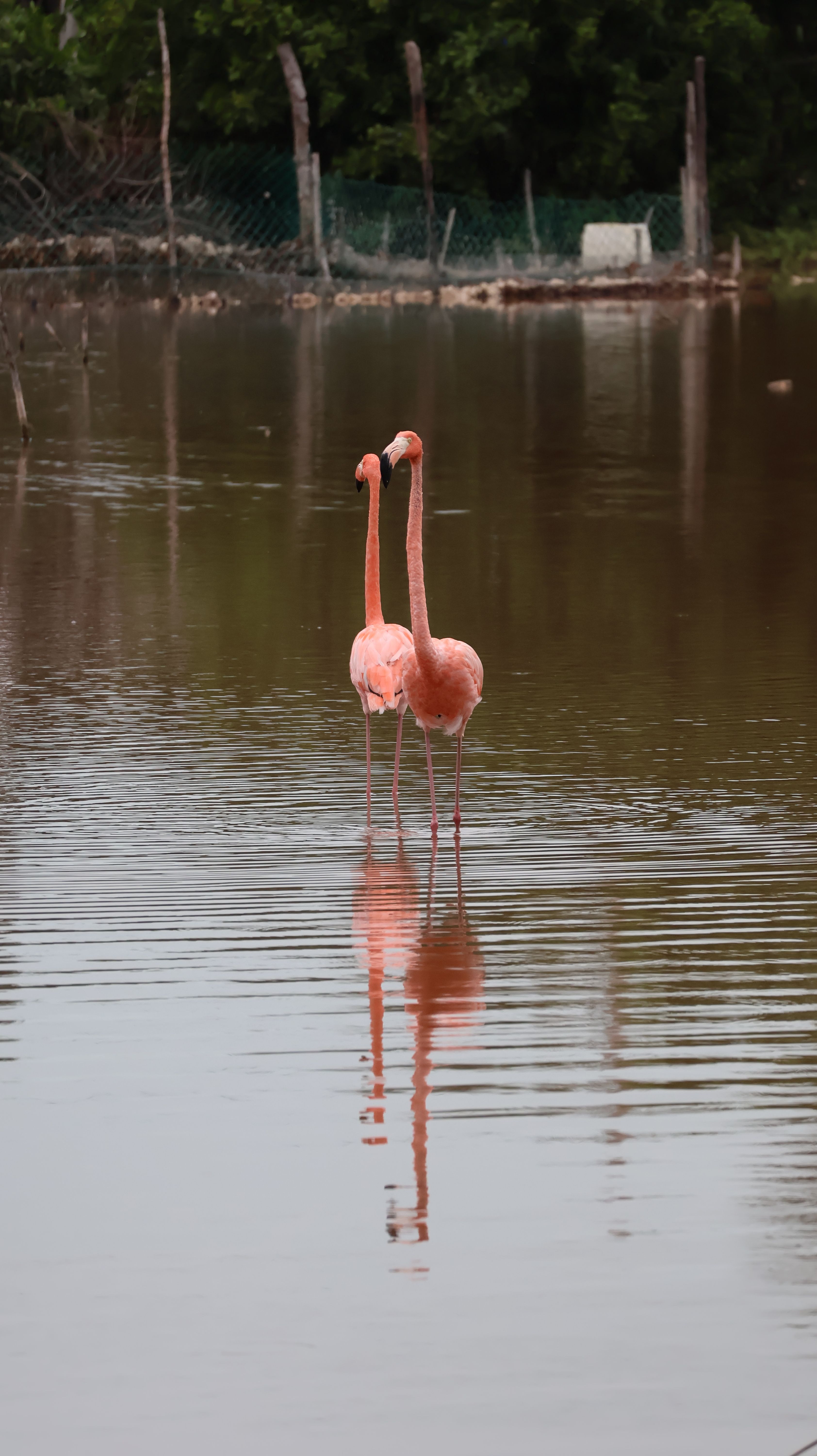
Punta Cocos, on the western tip, delivers the best sunsets. Punta Mosquito, to the east, reveals a spectacular sandbar at low tide and regularly attracts flamingos.

Swimming with whale sharks
From June to mid-September, the largest fish in the world feeds on plankton off the island. The outing runs about six hours and must be booked with a licensed operator, in small groups.
The animal is completely harmless, but supervision matters enormously. We work only with certified providers who respect the required distances and the cap on swimmers.
Bioluminescence, May through September
The phenomenon occurs when plankton lights up at the slightest movement in the water. The result: blue sparks flickering around you during a night swim.
You do need a moonless night and clear skies, though. Nobody can guarantee it in advance, so treat it as a bonus rather than a reason to book.
Wildlife you’ll actually see
Flamingos, pelicans, egrets, rays and occasionally dolphins. The three-island boat tour usually combines Isla Pájaros, Isla Pasión and the Yalahau cenote, a freshwater spring set in the mangroves. The island is still a fishing village too: we have mapped out the best fishing spots in the Riviera Maya in a dedicated guide.
Why choose Bacalar
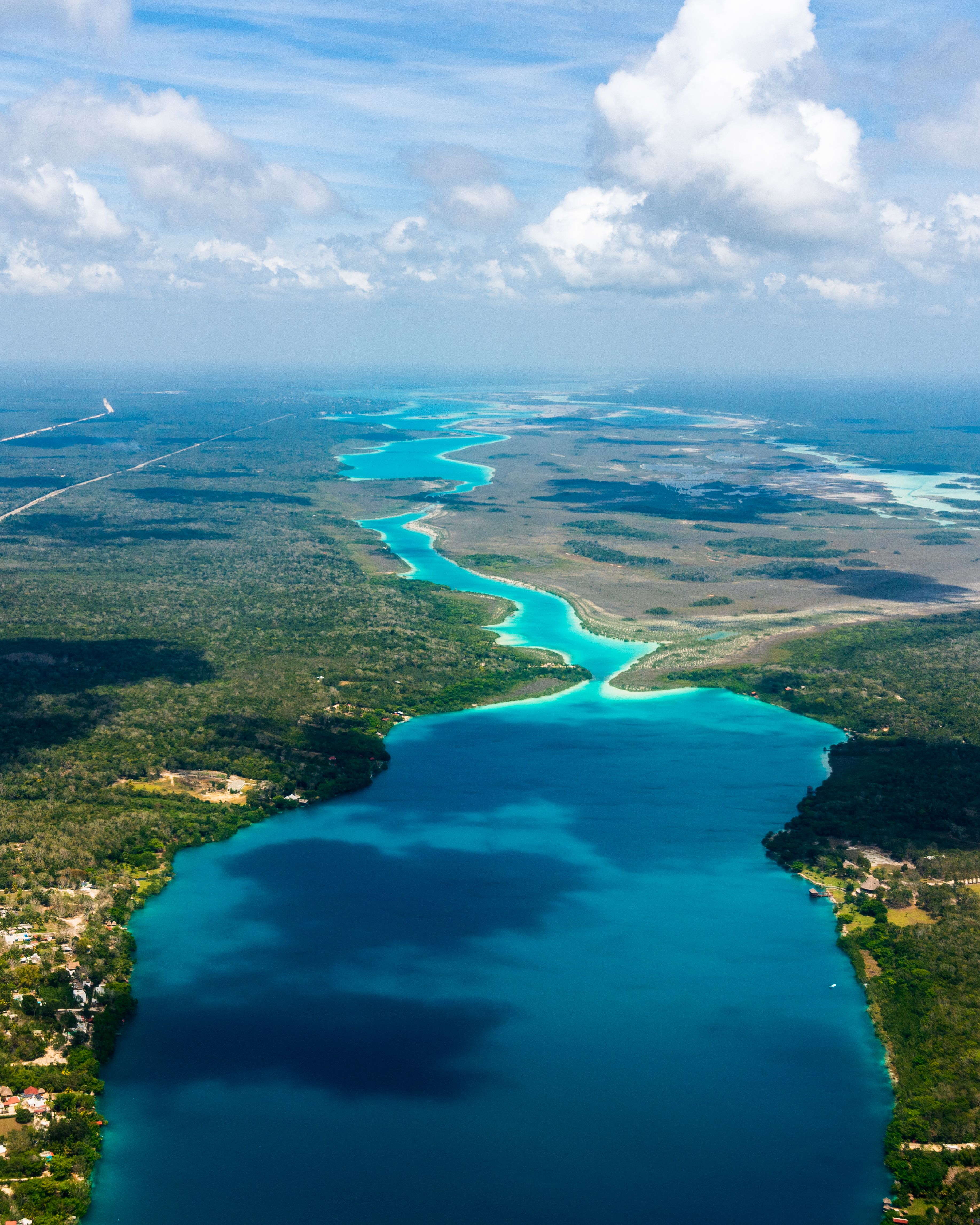
Bacalar is a pueblo mágico in southern Quintana Roo, set on the shore of a lagoon roughly 26 miles long. Locals call it the Lagoon of Seven Colors because of its blue and green gradients, created by shifting depths and the nature of the lake bed.
The water is fresh, warm and remarkably clear. No sargassum ever reaches it, since this isn’t the ocean.
The Lagoon of Seven Colors
This is obviously the whole point of the village. The best moment to enjoy it is sunrise, when the surface is mirror-flat and the motorboats haven’t launched yet.
Kayak, paddleboard or small sailboat: the lagoon reveals itself slowly. The Pirate Channel, the rapids and Cenote Cocalitos rank among the classic stops on a day tour.

The village cenotes
Four cenotes punctuate the lagoon. Cenote Azul, the deepest, sits just south of town. Cenote Negro and Cenote Esmeralda are best reached by kayak from the shore.
Cocalitos shelters stromatolites, living rock formations among the oldest on the planet. You never touch them, and you skip sunscreen entirely before swimming there. If the topic interests you, we’ve covered which cenotes to visit in the Riviera Maya in a dedicated guide.
A slice of history at Fort San Felipe
Built in the 18th century to repel pirates sailing up from Chetumal Bay, the fort still overlooks the lagoon. The visit takes about an hour and the museum is easy to walk through.
The village itself crosses on foot in twenty minutes. Twelve streets, a handful of cafés, a central square that comes alive at night: that’s the whole charm of Bacalar.
How to get to Holbox from Cancún
Access happens in two stages: the drive to Chiquilá port, then the ferry. Budget roughly three hours door to door from Cancún airport.
- Private transfer from Cancún or Playa del Carmen to Chiquilá. Simplest option, especially with luggage or kids.
- ADO bus from the Cancún terminal, about 2.5 to 3 hours depending on stops. Only a few departures each day, so book ahead.
- Rental car to Chiquilá, then guarded parking at the port. Expect roughly 100 to 150 pesos per day. Our car rental tips for the Riviera Maya will spare you surprises at the counter.
- The ferry crosses in about 25 minutes, departing every 30 minutes from 6 a.m. to 9:30 p.m. Two companies share the route at identical fares: around 330 pesos one way per adult.
Good to know: your car stays in Chiquilá — no tourist vehicles board the ferry. On the island, everything happens on foot or by golf cart. Bring cash too: ATMs are scarce and frequently out of service.
How to get to Bacalar from Cancún
Bacalar lies roughly 210 miles south of Cancún. Several options now exist, and the Maya Train has changed the picture considerably.
- By car, expect 4.5 to 5 hours on federal highway 307. The road is straightforward, well maintained and dotted with tolls. Our guide on police checkpoints in Mexico explains how they work.
- By ADO bus, about 5.5 to 6 hours from Cancún, with regular daytime departures and comfortable overnight coaches.
- By Maya Train, from the Cancún airport station to Bacalar station. Journey time varies with the schedule, generally between 3.5 and 4.5 hours, at a tourist-class fare around 320 to 400 pesos.
- By plane to Chetumal, then a 40-minute drive. A smart choice if you’re continuing into Belize.
To compare every way of moving around the country, our guide on getting around Mexico reviews buses, trains, flights and rental cars.
Holbox or Bacalar: which one costs more?
On this point, the answer is clear. Holbox costs noticeably more, because everything arrives by boat: food, water, building materials, fuel.
Here are realistic per-person, per-day figures, excluding long-distance transport. They give you a workable baseline. For activities, our breakdown of tour prices in Mexico shows what the booking platforms charge.
| Item | Holbox | Bacalar | Gap |
|---|---|---|---|
| Mid-range hotel | $145 to $220 per night | $78 to $145 per night | approx. 40% cheaper |
| Restaurant meal | $22 to $33 per person | $13 to $22 per person | approx. 35% cheaper |
| Signature tour | Whale shark, $145 to $200 | Lagoon tour, $39 to $78 | substantially cheaper |
| Kayak or paddleboard | $28 to $39 per half day | $17 to $28 per half day | approx. 30% cheaper |
| Realistic daily total | $200 to $290 | $120 to $190 | approx. 35% cheaper |
These amounts shift with the season and the exchange rate. We confirm exact pricing when you book, based on your dates. Our guide to hotels in the Yucatan Peninsula will help you pin down the right bracket. Factor in tipping in Mexico as well, which weighs more on a trip budget than most people expect.
Best time to visit, month by month
Here again, Holbox or Bacalar follow different rules. The island depends heavily on whale shark season, while the lagoon looks stunning nearly year-round.
| Period | Holbox | Bacalar |
|---|---|---|
| December to March | Dry and mild, busiest months, no whale sharks | The prime window: clear skies and vivid lagoon |
| April and May | Rising heat, first mosquitoes, island still calm | Great compromise, before the rains and the crowds |
| June to mid-September | Whale shark and bioluminescence season | Short afternoon showers, lush greenery |
| Mid-September to November | Wettest months, hurricane risk, lowest rates | November turns excellent again, very few visitors |
In short, if whale sharks top your list, your dates are set for you. Otherwise, November and early December offer the best weather-to-crowds ratio at both destinations. Our article on the best season to visit Mexico breaks this calendar down region by region, and our weather in Mexico page gives temperatures month by month.
How many days to plan
A classic mistake is booking a single night on the island. Between the drive and the ferry, you end up spending more time traveling than enjoying.
- Holbox: three nights. One arrival and beach day, one boat excursion, one day of cycling and sunsets.
- Bacalar: two to three nights. A lagoon tour, a cenote circuit, a sunrise kayak and the fort.
- Fewer than two nights: avoid in both cases. Travel time eats the day and the experience loses its point.

Can you visit Holbox and Bacalar on the same trip?
Yes, but not in a single week. The two sites sit at opposite ends of Quintana Roo, roughly seven hours apart between Chiquilá and Bacalar via Cancún.
From twelve days onward, the combination becomes comfortable. Here’s the itinerary we build most often for our travelers.
- Days 1 to 3: land in Cancún, transfer to Chiquilá, three nights on Holbox.
- Day 4: back to the mainland with a stop in Valladolid or Puerto Morelos to break up the drive.
- Days 5 to 7: Tulum, cenotes and Maya sites. Our roundup of the 16 must-sees of the Riviera Maya will help you choose.
- Days 8 to 10: head south to Bacalar, by car or train, then three nights on the lagoon.
- Days 11 to 12: loop back to Cancún, or push on toward Calakmul and Belize.
For a wider loop, our Yucatan Peninsula road trip guide covers the stages and the distances. If you only have seven days, pick one. Our one week in the Riviera Maya plan shows how to fit one of them in without turning the trip into a driving marathon.
The honest downsides of both destinations
We’d rather tell you now than have you find out later. Both places have real weak points that brochures tend to skip.
Where Holbox falls short
- Mosquitoes are very much present, especially at sunset and during the rainy season. Repellent isn’t optional.
- Prices surprise people, particularly for accommodation. Value for money is weaker than elsewhere in the region.
- Sandy streets turn into puddles after heavy rain. Golf carts run constantly, and the noise carries near the center.
- Seagrass and algae show up in patches. It isn’t sargassum in the strict sense, but the water occasionally loses its clarity. We’ve covered swimming despite sargassum in Mexico in detail.
Where Bacalar falls short
- There is no public beach. Nearly the entire shoreline belongs to hotels and balnearios, with an entrance fee or a minimum spend.
- The village has no ocean. If you’re dreaming of white sand and waves, you may come away disappointed.
- Motorboat traffic has grown on the lagoon. Sunrise therefore remains the best window for kayaking.
- The site is fragile, which means strict rules: no sunscreen before swimming, no contact with the stromatolites. Our guide on sunscreen rules in Mexico explains what to pack. On the ground, we only work with partners involved in the Misión Boyado, which protects the lagoon.
Holbox or Bacalar: our pick for your travel style
Here’s how we actually advise, depending on the kind of trip.
| Profile | Our pick | Why |
|---|---|---|
| First trip to Mexico | Holbox | Easier to combine with Cancún and the Riviera Maya |
| Honeymoon | Bacalar | More intimate, quieter, boutique hotels on the water |
| Family with kids | Holbox | Shallow water, no waves, fully pedestrian island |
| Tight budget | Bacalar | Lodging and dining are considerably more affordable |
| Marine wildlife lover | Holbox | Whale sharks, flamingos, bioluminescence |
| Returning to the region | Bacalar | Different feel, less visited, more authentic |
| Road trip heading south | Bacalar | Logical stop toward Chetumal, Calakmul and Belize |
What we arrange for you on the ground
Holbox or Bacalar, logistics make the difference between a smooth trip and a string of small disasters. Here’s what our travel coaches handle.
- Private transfers from the airport, your hotel or Chiquilá port, with an English- or Spanish-speaking driver depending on availability.
- Car rental through vetted partners, insurance included and no surprise deposit at the counter.
- Group or private tours, picking you up at your hotel or meeting you on site if you’re road-tripping: whale sharks, three islands, Bacalar lagoon, cenotes.
- Private boat charter for an outing at your own pace, with family or friends and a local captain.
- Private chef at your villa or rental, for a Mexican dinner or a special occasion.
- Concierge service throughout your stay: restaurant bookings, itinerary tweaks, help when something goes sideways.
Not sure how this kind of support works? We explain everything in our article on what a travel coach is.
Mistakes we see every day
- Booking a single night on Holbox. The most common mistake, and the one that spoils the experience most.
- Coming to Holbox outside whale shark season and hoping to see one anyway. They’re only here from June to mid-September.
- Arriving in Chiquilá without cash. Parking, the ferry and local taxis mostly run on pesos.
- Booking a Bacalar hotel far from the lagoon to save money. Without water access, the stay loses its main appeal.
- Applying sunscreen before swimming in the lagoon or the cenotes. Stromatolites don’t survive it.
- Trying to fit Holbox and Bacalar into one week. Seven hours of road separate them, ferry not included.
- Forgetting insect repellent. On the island and by the lagoon alike, it quickly becomes essential. Our Mexico packing list covers everything you’ll need.
Frequently asked questions about Holbox and Bacalar
Holbox or Bacalar: which one is more beautiful?
Both are, in different ways. Holbox wins you over with white sand beaches and shallow water. Bacalar stuns with the blue gradients of its Lagoon of Seven Colors. If you want the ocean, choose Holbox. If you want quiet and fresh water, choose Bacalar.
Can you visit Holbox and Bacalar on the same trip?
Yes, from twelve days onward. The two destinations sit at opposite ends of Quintana Roo, roughly seven hours apart by road. Under ten days, it’s better to pick one and build out the rest of the itinerary.
How long does it take to get from Cancún to Holbox?
About three hours door to door: two hours by road to Chiquilá port, then a 25-minute ferry. Crossings leave every 30 minutes from 6 a.m. to 9:30 p.m., at roughly 330 pesos one way per adult.
Is there sargassum in Holbox and Bacalar?
Not in the way you see it on the Caribbean coast. Holbox faces the Gulf of Mexico and is largely spared, although seagrass appears in patches. Bacalar is a freshwater lagoon with no sargassum whatsoever.
Which destination is cheaper?
Bacalar, clearly. Expect roughly 35% less across a full daily budget. Holbox is an island where everything arrives by boat, which mechanically inflates the price of lodging, meals and tours.
Can you swim with whale sharks in Bacalar?
No. Whale sharks only frequent the waters off the northern peninsula, near Holbox and Isla Mujeres, from June to mid-September. Since Bacalar is a freshwater lagoon, the activity doesn’t exist there.
Is Bacalar good with children?
Yes, the fresh water is warm, calm and shallow near the shore. Just keep an eye on wooden piers and the deeper zones around the cenotes. Our article on traveling with a baby in Mexico covers the useful precautions.
What is the best time to visit Bacalar?
December through March, during the dry season, when clear skies bring out every shade of the lagoon. November and May also offer an excellent compromise, with fewer people and softer rates.
Do you need a rental car for Holbox or Bacalar?
For Holbox, no: the car stays at Chiquilá port and the island is walkable or golf-cart friendly. For Bacalar, it helps if you want to range out toward the cenotes and Mahahual, though it isn’t essential in the village itself.
Does the Maya Train really serve Bacalar?
Yes, there is a station named after the village. From the Cancún airport station, the trip generally takes between 3.5 and 4.5 hours depending on the schedule. Check timetables before you travel, as they change regularly.
Holbox or Bacalar? Let’s decide together
Transfers, group or private tours, car and boat rental, private chef: we handle the logistics while you enjoy the trip. Let’s talk through your itinerary, no strings attached.