


What to do in one week in the Riviera Maya Quintana Roo in Mexico?
One Week in the Riviera Maya: Our Day-by-Day Itinerary

In short: one week in the Riviera Maya comes down to the order of your days. One day goes to flying, another to shaking off the time change, which leaves five real days of exploring. Our itinerary builds those around a single hotel, so distances never wear you down.
What can you actually do in one week in the Riviera Maya, in Quintana Roo, Mexico? We get the question in almost every conversation. And the answer rarely fits into a list of activities.
What matters is the logic of the trip. We live here, in Playa del Carmen, and this itinerary was built with our travelers, tested, corrected, then rewritten. Let’s go.
The itinerary at a glance
Seven days looks comfortable on paper. On the ground, the flight and the time change already swallow two of them.
Hence this structure: protect the start of the trip, put the big days in the middle, and keep the last one completely open.
| Day | Plan | Drive | Pace |
|---|---|---|---|
| Day 1 | Flight, arrival in Cancún and transfer | 1 hr | Travel |
| Day 2 | Rest, local area, half-day cenote or buggy | 30 min | Easy |
| Day 3 | Isla Contoy and Isla Mujeres | 1.25 hrs | Full |
| Day 4 | Chichén Itzá, Valladolid and a cenote | 2.5 hrs | Full |
| Day 5 | Cozumel, diving and snorkeling | 45 min | Moderate |
| Day 6 | Tulum, Akumal and swimming with turtles | 1 hr | Moderate |
| Day 7 | Souvenirs, beach and departure | 1 hr | Easy |
The principle: one base, and you radiate out from it. Over seven days, changing hotels costs more time than it saves. A road trip only starts making sense from two weeks up. Our guided excursions in Mexico are built around that same rhythm.
Day 1: the flight and arrival in Cancún
Most long-haul flights land in the late afternoon or evening. Count on a full day of travel, layover included.
On landing, immigration usually takes between thirty minutes and an hour. Add 45 minutes to an hour on Federal Highway 307 to reach Playa del Carmen.
In other words: plan nothing that day. A transfer booked in advance, a simple dinner, and bed.
Three reflexes on arrival
- Book your private transfer ahead of time. Negotiating a taxi outside the terminal at 11 p.m. is nobody’s idea of fun.
- Withdraw pesos from a bank ATM, never from an airport exchange booth.
- Keep light clothing in your carry-on. The humid heat hits the moment you step off the plane.
Two things are worth sorting long before takeoff: your paperwork and your bag. We cover the documents required at the border in our guide to the formalities for traveling to Mexico, and the full packing list in what to pack for Mexico.
Day 2: rest, acclimation and a first taste
The time difference runs one to three hours from most of the United States, and up to seven from Europe. For many travelers, day two is mainly about resetting the body clock.
Stay close to your base. Playa del Carmen and Puerto Morelos are perfect for a day without pressure.
Taking it slow
- A walk along Quinta Avenida, the pedestrian spine of Playa del Carmen.
- A swim at Playa Punta Esmeralda, far quieter than the central beaches.
- Puerto Morelos, a slow-paced fishing village with its reef just offshore.
- Tacos al pastor at a neighborhood taquería, well away from Fifth Avenue.
Or a half-day outing
If the energy is there, a short trip works well. A cenote less than thirty minutes away, or a buggy ride out to a Maya village.
Casa Tortuga, near Tulum, is our best all-round pick for a first swim: four pools, two open, two in caves. Chac Mool, thirty minutes from Playa del Carmen, also works nicely.
To help you choose, we wrote a full guide with prices and access conditions: which cenotes to visit in the Riviera Maya.
Good to know: regular sunscreen is banned in cenotes and near the reef. Bring a mineral sunscreen without oxybenzone, or a long-sleeve rash guard that will do the job just as well. We lay out the full rules in how to protect yourself from the sun in Mexico.

Day 3: Isla Contoy and Isla Mujeres
Your first real day of exploring, and it happens on the water. You are rested, the sea is calm in the morning: the timing is ideal.
Isla Contoy is a national park that admits only 200 visitors per day. A sanctuary for migratory birds, it borders the second-largest coral reef on the planet.
Snorkeling happens inside a protected zone, with visibility that rarely disappoints. It is the kind of place photos never quite capture.
The afternoon on Isla Mujeres
Isla Mujeres comes right after. White sand, shallow water, a colorful downtown: the island is easy to cover by golf cart.
It is also home to MUSA, an underwater museum of submerged sculptures you can visit by snorkeling or scuba diving.
The Contoy and Isla Mujeres combo in a single day is our favorite outing of the week. Two islands, two moods, one boat ride.

Day 4: Chichén Itzá, Valladolid and a sacred cenote
Chichén Itzá is the best-known archaeological site on the Yucatán Peninsula. A UNESCO World Heritage Site, it also ranks among the New Seven Wonders of the World.
The Kukulcán pyramid, known as El Castillo, is the centerpiece. Around it sit the great ball court, the observatory and the sacred cenote where the Maya left their offerings.
It is the longest day of the week, with a two-and-a-half-hour drive each way. We place it mid-trip, once you are acclimated and your energy is at its peak.
The move to make: leave before 7 a.m. By 11, the coaches from Cancún arrive and photographing the pyramid without crowds becomes very hard. Most tours add a stop in Valladolid, a colonial town of pastel facades, plus a swim in a cenote such as Ik Kil or Xcanché.
Plenty of travelers hesitate because of the drive and the crowds. We answered that one in full: is Chichén Itzá worth visiting? The site also appears in our selection of the 16 must-sees of the Riviera Maya.

Day 5: Cozumel and the Mesoamerican Reef
After yesterday’s long drive, ease off. Cozumel is a 45-minute ferry ride from Playa del Carmen, nothing more.
The island sits on the Mesoamerican Reef, the second-richest reef system on the planet. It ranks among the most celebrated dive spots in the Caribbean.
What makes the day worth it
- A discovery dive, open to beginners with no certification, led by an instructor.
- Snorkeling in the protected zone, with visibility often beyond a hundred feet.
- Swimming with starfish in the shallow sea.
- A loop of the island by car or scooter, for the wild beaches of the east coast.
Sport fishing fans will find plenty offshore too. We mapped out the best fishing spots in the Riviera Maya if that is your thing.
Traveling with kids? This day swaps out neatly for a park. Xcaret blends underground rivers, native wildlife and an evening show. Xplor leans into zip lines and underground rafting, Xenses into optical illusions.

Day 6: Tulum, Akumal and swimming with sea turtles
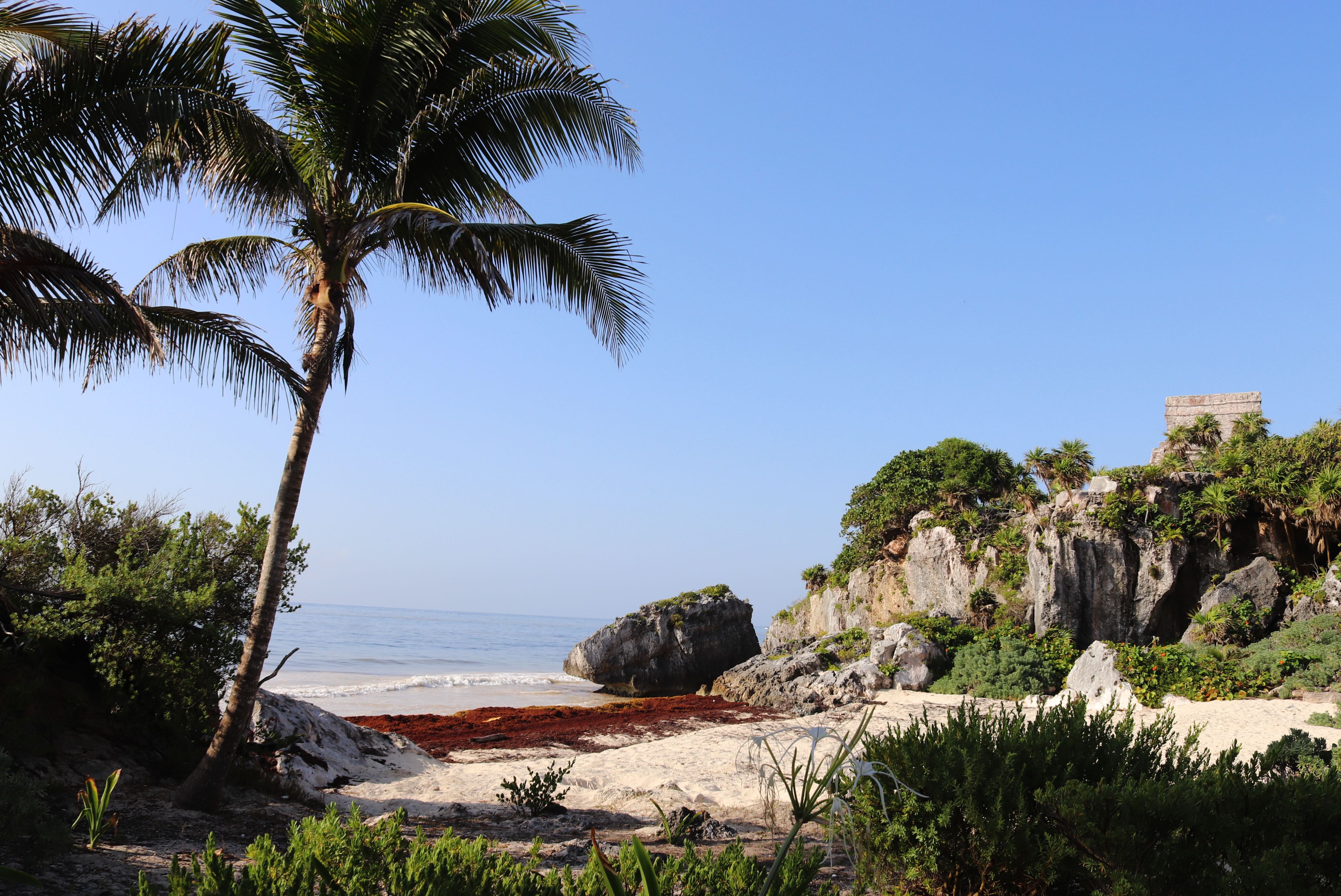
The archaeological site of Tulum is the only Maya city built facing the sea. Perched on a forty-foot cliff, the view is hard to forget.
You can walk the site in about ninety minutes. It is far smaller than Chichén Itzá, but the morning light on the Temple of the Wind God is worth the early start.
The afternoon in Akumal bay
Twenty minutes north of Tulum, Akumal bay is home to green sea turtles that graze on the seagrass beds. You snorkel with mask, fins and a mandatory life vest.
A certified guide is now required inside the protected zone. That is good news: visitor numbers are managed and the turtles are far less disturbed.
Putting Tulum late in the trip has an upside: you know your bearings by then, and the day stays short on transport. Ideal before your last night.

Day 7: souvenirs, beach and departure
Schedule no excursion that day. A late bus the day before a long-haul flight is exactly the kind of stress nobody needs.
Save the morning to return to whatever you liked best. One last swim, one last ceviche, a few souvenirs on Quinta Avenida.
Plan to be at the airport three hours before takeoff, and count an hour of driving from Playa del Carmen. Long-haul flights often leave in the early afternoon.
These unplanned hours are often the ones people remember. And you leave with a solid reason to come back: Sian Ka’an is still waiting, and one day you will have to choose between Holbox and Bacalar.

Why one base beats a road trip on a short trip
On a map, the Riviera Maya looks compact. In reality, distances add up fast and Highway 307 sets its own pace.
Changing hotels every two days on a one-week trip means losing half a day to logistics each time. Check-out, drive, check-in, repack.
- One week: a single base. Playa del Carmen or Puerto Morelos covers everything you want to see.
- Ten days: two bases at most. You can add Tulum or Valladolid without breaking the rhythm.
- Two weeks: the road trip earns its place. Bacalar, Holbox and Mérida all come within reach.
- Three weeks: you can push further. That is the point where Campeche genuinely fits, without turning the trip into a race.
We break down every transport option, including hidden costs and classic traps, in our guide to getting around Mexico.
How much a week in the Riviera Maya costs
Here are ballpark figures per person, excluding international airfare, for seven days on the ground. Amounts shift with the season and the exchange rate.
| Category | Budget | Comfort | Premium |
|---|---|---|---|
| Lodging, 7 nights | $280 to $450 | $550 to $1,000 | $1,350 and up |
| Food | $135 to $200 | $250 to $390 | $500 and up |
| Tours and activities | $220 to $340 | $370 to $560 | $670 and up |
| Local transport | $55 to $90 | $135 to $225 | $335 and up |
| Estimated total | $690 to $1,080 | $1,305 to $2,175 | $2,855 and up |
Tours are where you save the most. A package bundling Contoy, Chichén Itzá, Cozumel and Tulum costs noticeably less than four separate bookings.
The smart move: pay in pesos, never in dollars. The rate merchants apply is consistently unfavorable, and the gap adds up fast across a full week.
When to go: weather, sargassum and crowds
The dry season runs from November through March. That is the best window, and also the busiest. We compare every month of the year in the best season to go to Mexico.
| Period | What to expect |
|---|---|
| November to March | Dry season and high season, mild heat. Book early. |
| April to May | Strong heat, and Easter week draws big domestic crowds in April. |
| May to September | Sargassum season along the coast, with wide variation by beach. |
| June to mid-September | Whale shark swims possible off Isla Holbox. |
| June to October | Rainy season, usually short late-afternoon downpours. |
| August to September | Hurricane season, worth watching closely. |
The real question: sargassum
These brown algae arrive in waves, mostly between May and September. Some beaches are cleaned daily, others far less so.
Good news: cenotes, Isla Contoy, Isla Mujeres and Cozumel are largely spared. In short, this itinerary holds up well even at the height of sargassum season.
For what the beaches actually look like, read can you swim despite the sargassum in Mexico.

Getting around the Riviera Maya
- The colectivo: shared minivans between Playa del Carmen and Tulum along Highway 307. Cheap and frequent, but with no fixed schedule.
- The ADO bus: comfortable and air-conditioned, ideal for Cancún, Tulum or Valladolid. Book online in high season.
- A rental car: handy for remote cenotes. Watch the mandatory insurance, often charged as an extra on arrival.
- A private transfer: essential for day 1, especially with an evening flight or with kids.
- The ferry: Playa del Carmen to Cozumel, with roughly hourly departures.
Renting a car without the nasty surprise
This is what trips up our travelers the most. The rate advertised online often doubles at the counter, once the mandatory insurance is added.
At Mexique Aventure we offer reliable car rentals with no surprises, at an all-inclusive rate quoted up front. We also handle private transfers to and from Cancún airport, with a driver who waits for you even when your flight runs late.
We break down the traps of the sector in our car rental advice for the Riviera Maya.
Our tours also include hotel pickup. That removes the badly organized 5 a.m. pickups and the last-minute surprises.
Where to base yourself for the week
- Playa del Carmen: the best all-round base. Central, lively, well connected, and within 2.5 hours of everything. Our default pick.
- Puerto Morelos: a quiet fishing village between Cancún and Playa, with its reef just offshore. Perfect for a slow pace.
- Akumal: great for families, with a sheltered bay and very gentle water.
- Tulum: bohemian vibe and design hotels, but everything costs more, sits further apart and is farther from the islands.
- Cancún hotel zone: convenient for all-inclusive resorts, less so for exploring the region.
Torn between neighborhoods or formats? That is exactly what we sort out together, and you can browse our Mexico destinations to get a first sense of the options.

Our on-the-ground tips
- Tap water is not for drinking. Bring a filter bottle; most hotels have refill stations.
- Tipping is a meaningful part of local income. We explain why in why tipping is essential in Mexico.
- Natural insect repellent goes on an hour before any jungle or cenote outing.
- Safety: the Riviera Maya is a monitored tourist corridor. We answer the question head-on in is it dangerous to travel to Mexico.
- Police checkpoints feel intimidating at first. Nothing to worry about: should you be afraid of police controls in Mexico?
- Healthcare: good private clinics all along the coast. Details in what medical support looks like in Mexico.
- Traveling with a baby changes a few reflexes: what to plan when traveling with a baby to Mexico.
- A little Spanish opens doors. A sincere “buenos días” often changes the welcome you get.
- Certified English-speaking guides are limited in number and book up early, especially in high season.
Frequently asked questions about one week in the Riviera Maya
Is one week enough to visit the Riviera Maya?
Yes, provided you keep a single base. Out of seven days, the flight and the time change consume two, leaving five real days. That is plenty for a protected island, a major Maya site, a cenote and the reef.
Why not book an excursion on the first day?
Because most long-haul flights land in the evening. Between immigration and the transfer, you reach your hotel late, and the time change is felt the next morning. Day two is there to recover.
Should I do a road trip or stay in one place?
For one week, a single base is far more comfortable. Every hotel change costs half a day in logistics. A road trip becomes worthwhile from two weeks up, when Bacalar, Holbox or Mérida come into play.
How much should I budget for seven days in the Riviera Maya?
Expect $690 to $1,080 per person on a budget trip, and $1,305 to $2,175 for a comfortable one, excluding international airfare. Lodging and tours are the two biggest line items.
What is the best time of year to visit Quintana Roo?
November through March, during the dry season. Heat is more manageable and sargassum is rare, though prices and crowds both climb sharply.
Can you do Chichén Itzá as a day trip from Playa del Carmen?
Yes. Plan on two and a half hours each way and a departure before 7 a.m. Most tours add Valladolid and a cenote on the same route.
Does sargassum ruin a one-week trip?
Not with this itinerary. Cenotes, Cozumel, Isla Mujeres and Isla Contoy stay largely unaffected, even at peak season.
Are there English-speaking guides in the Riviera Maya?
Yes, though they are limited in number and book early. Our tours include certified English-speaking guides at the main sites in the region.
Your Mexican itinerary starts here
Book your free call with a travel coach based in the Riviera Maya. We map out your dates, your budget and your pace together, with no commitment.